
Plumbing work does not always begin with a failure. Sometimes a homeowner sees a problem coming and acts before it arrives, and that is what Jimmie S. and his wife did when they decided their aging gas water heater in the attic was a failure waiting for a date. Their account is a plain description of what a planned replacement looks like, and of why the plan mattered as much as the equipment.
The worry overhead
A water heater in the attic carries a particular risk. When the tank fails, and every tank eventually does, the water goes straight down through the ceiling into the rooms below, and it does so whether or not anyone is home. Jimmie and his wife had lived with that thought for some time.
We always feared it might leak and flood at some point, especially if we were away.
Jimmie S., Hampton Roads homeowner
A Monday call
On a Monday they contacted Russell’s American Mechanical, which has served Hampton Roads since 1977, to talk about switching to a tankless water heater and getting the tank out of the attic for good. That afternoon, technician Daryl came by to look at the space, offer advice, and answer the couple’s questions about going tankless.
A Wednesday installation
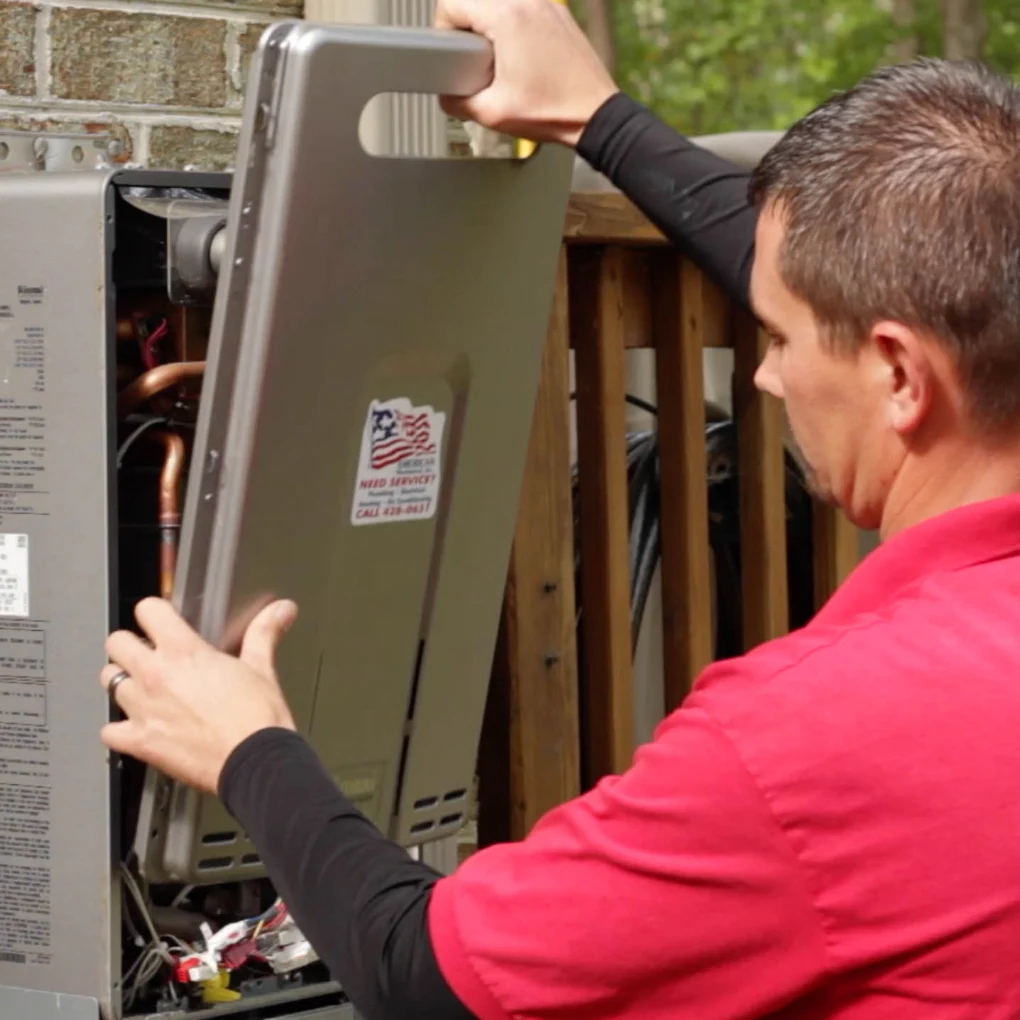
Two days later, technicians Tyler and Cody arrived early to start the job. They ran a new gas line from the meter to the new tankless unit, which was installed outside, and the permits had already been handled and the materials brought along. They stayed until everything was working and finished the installation in a single day.
One-day install, and we could not be happier. What a difference it has made, especially no worries about flooding the attic.
Jimmie S., Hampton Roads homeowner
Jimmie also noticed that hot water reached the faucets faster than it had before.
Why the plan mattered
Because the couple acted before the tank failed, the work happened on a chosen day rather than in the hours after a leak. That gave Russell’s team the time to plan the gas line and the outdoor installation carefully and to have the permits in hand before the first tool came out, instead of rushing a fix while water dripped through a ceiling. It also gave the homeowners the time to ask their questions on a Monday afternoon and make the decision on their own schedule. A replacement done this way is the same equipment as a replacement after a failure and a different experience in every other respect.
The attic tank in Hampton Roads
Jimmie’s worry is a common one across the region, where builders placed water heaters in attics to save floor space and left homeowners with a tank above the living areas. A tank heater lasts about 8 to 12 years, its failure is a leak rather than a decline, and an attic leak is the most expensive kind, since the water crosses a ceiling, the insulation, and whatever sits below before anyone sees it. Many Hampton Roads homes also have their attic tanks on a drain pan that was never connected to anything, which catches a slow drip and does nothing for a burst. A tankless unit removes the tank entirely, mounts outdoors or on a wall, and lasts about 20 years with a yearly descaling flush. Outdoors in Hampton Roads, the salt air is the consideration, and a unit rated for coastal installation is part of the plan, along with a gas line sized for the unit’s draw, since a tankless heater uses several times the gas of a tank while it runs. Our post on why homeowners switch to tankless covers the decision, and our tankless water heater and gas line pages cover the two halves of the job Tyler and Cody did.
If you are considering the same move
Many Hampton Roads homeowners carry the same quiet worry about a tank in the attic, and Jimmie’s account shows that the worry does not have to end with a ceiling. Russell’s American Mechanical has served Hampton Roads since 1977; schedule a plumbing inspection online, through the website chat, or by phone, and a technician will look at the current system, explain whether a tankless upgrade fits the house, and present the price at everyday pricing before anything is scheduled, with financing available.
