
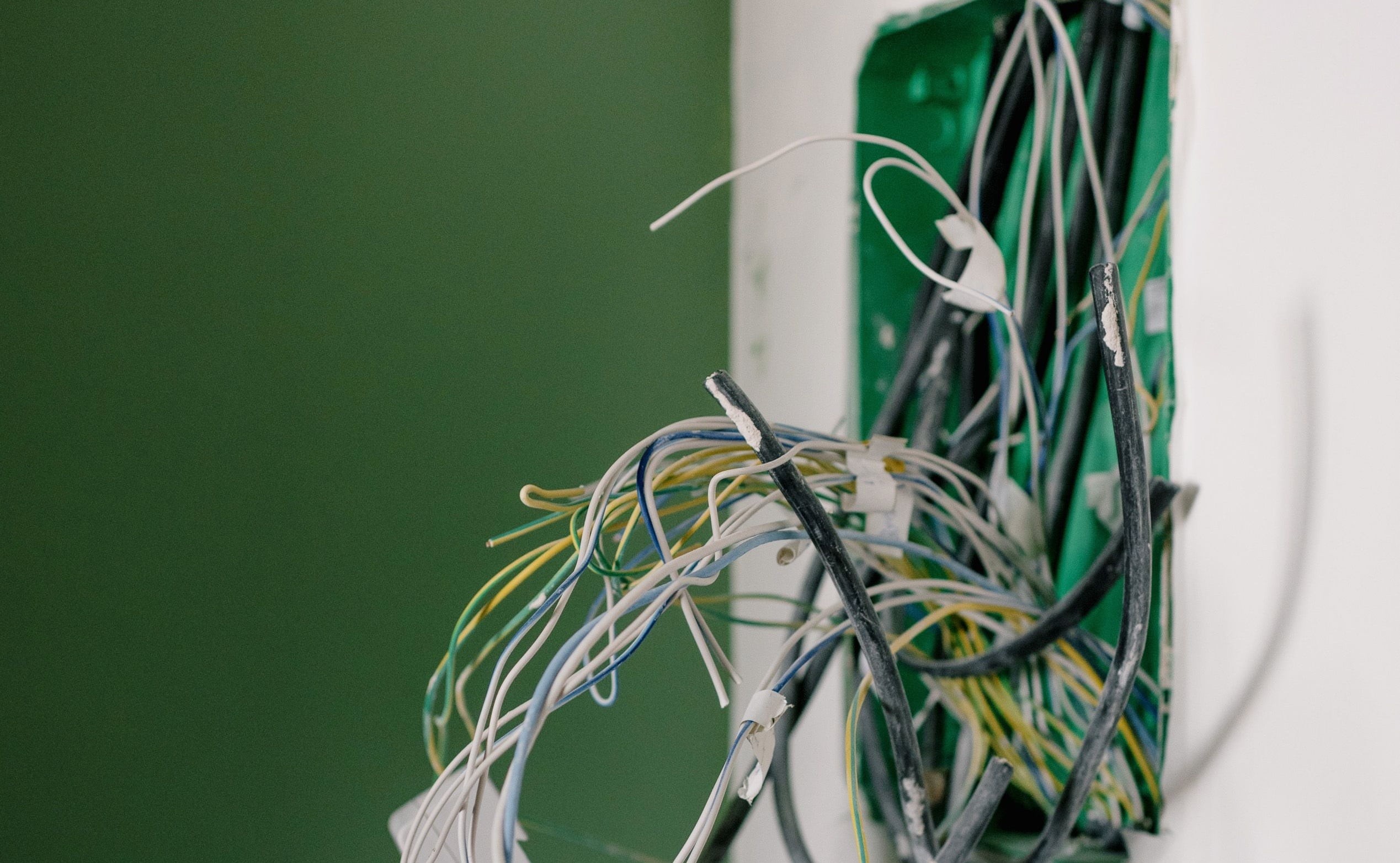
Electrical systems last a long time, which is why so few of us know how old ours is or what it is made of. The wiring went in when the house was built, the panel was installed or replaced decades ago, and both have been out of sight since. Every part of the system has a service life, though, and a home approaching the end of one gives signs that are easy to mistake for the quirks of an older house. This post explains how to tell what era your home’s wiring comes from and how long each component tends to last. It also covers what an aging system looks like and how to think about updating it.
Finding out what you have
A few minutes at the panel and in the attic or crawl space usually tell the story, and a home inspection report or the original permit record fills in the rest.
- Knob-and-tube wiring, found in homes built before about 1940 across Norfolk and Portsmouth, shows as individual cloth-covered wires running through ceramic knobs and tubes in the attic, with no ground wire.
- Cloth-insulated cable from the 1940s and 1950s has a woven fabric jacket that becomes brittle with age and often has no ground.
- Aluminum branch wiring, installed in a great many homes between 1965 and 1973, shows as silver rather than copper at the panel and at outlets, and it is the era that Virginia Beach and Chesapeake grew fastest.
- Modern copper cable with a plastic jacket, in white, yellow, or orange, is what homes from the late 1970s onward have, and it is the standard today.
- The panel’s age is often printed inside the door, and its manufacturer is on the label. A fuse box, or a panel from the 1950s through 1980s, is old enough to evaluate regardless of how it seems to work.
How long each part lasts
Copper wiring in good condition lasts the life of the house, though its insulation can be damaged by heat, rodents, or renovation. Aluminum branch wiring is not so much a matter of lifespan as of connections, which loosen and overheat over time and need either specific repair or replacement. Panels last 25 to 40 years, and breakers wear with every trip, so a panel from the 1980s is at the end of its range now. Outlets and switches last 15 to 25 years, with the ones that see heavy use, in kitchens and near desks, wearing first. GFCI outlets last about 10 to 15 years and should be tested monthly. Smoke and carbon monoxide detectors last about 10 years, and the date is printed on the back. Outdoor equipment on the coast, including the meter base and any exterior disconnect, wears faster than all of these because of salt air.
What an aging system looks like from the living room
The signs arrive in a pattern that is easy to live with for years. Breakers begin tripping under loads they used to carry. Lights dim when the air conditioner or the dryer starts. Outlets grow loose, so plugs fall out, or they stop holding a charger at all. Switch and outlet plates feel warm, or show a brown tint around the edges. Two-prong outlets, or a kitchen and bathroom without GFCI protection, tell you the wiring predates current safety practice. There are not enough outlets for the way the rooms are used, so extension cords have become permanent. A faint burning or fishy smell comes and goes. Any two of these together are a reason to have the whole system evaluated rather than fixing the next outlet on its own.
The coastal factor
Hampton Roads shortens the life of everything electrical that lives outdoors or in an unconditioned space. Salt air corrodes the meter base, the service entrance, the air conditioner’s disconnect, and the outlets on the porch, and corrosion builds resistance that turns into heat. The high water table and the region’s flooding put panels in garages and utility rooms at risk, and a panel that has taken water even once is one to evaluate. Homes near the water with docks and boat lifts add wiring that needs specific GFCI protection and bonding, and the systems on older docks often predate those requirements. A milestone here can arrive earlier than the calendar suggests.
Deciding what to do
Reaching a milestone does not mean the whole system has to be replaced at once, and it should not feel like a crisis. An electrical inspection sorts the findings into what is a safety matter now, what is a capacity limit that will matter when you add the next appliance, and what is simply old but sound. A panel upgrade is often the single change that resolves the most, since it brings modern breakers, proper grounding, and room to grow. Wiring work can address aluminum connections or a section of failing cable without rewiring the whole house. GFCI and modern outlets can be added room by room. The technician lays out those options at everyday pricing and explains the reasoning behind each, and the order and the timing are yours to set.
Getting a clear picture
Russell’s American Mechanical has served Hampton Roads since 1977, and many of the homes we work in today were wired long before that. If your home is more than thirty years old and its electrical system has never been evaluated, or if you have noticed any of the signs above, schedule an inspection online, through the website chat, or by phone. Members of the Premium Home Care Agreement receive that inspection annually, and every homeowner receives a plain explanation of where the system stands, so that when it reaches its milestone, you are the one who decides what happens next.