
Losing heat is miserable anywhere. In Hampton Roads it tends to happen on the coldest night of an otherwise mild winter, when the system is suddenly asked to do something it has not done since February. If that is where you are tonight, five things are worth checking before you call anyone, and one of them often solves it. If the house is still cold afterward, the rest of this post explains what the technician is likely to find and how to prevent a repeat.
Five things to check first
- Start at the thermostat. Make sure it is set to heat rather than cool or auto, the set point is above the room temperature, and the batteries are fresh if the display looks dim.
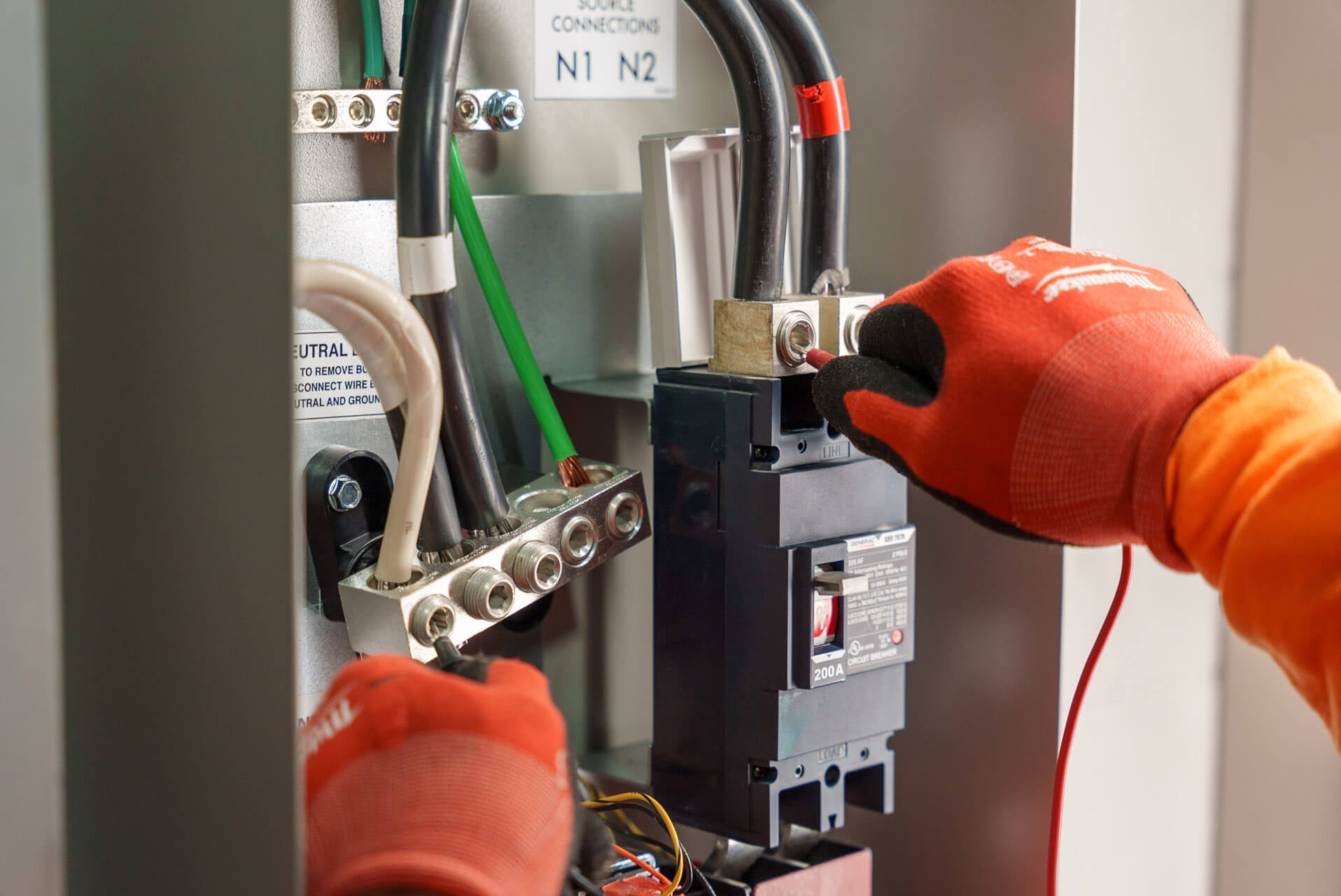
- Look at the breaker panel, and if a breaker labeled furnace, air handler, or heat pump has tripped, reset it once. If it trips again, leave it off and give us a call, because it is protecting you from a fault, and our electricians can find it.
- Pull the filter, since a clogged one chokes off the system’s air and trips a safety switch, and swap it out if it looks dirty.
- If you have a heat pump, clear leaves and debris from the outdoor unit. Frost on the coil is normal and clears during a defrost cycle, while a solid block of ice is not.
- Check the fuel by making sure the gas valve is open, or, for a boiler, that the pressure gauge reads in its marked range.
After any of these, give the system twenty minutes. If the house is still cold, the cause is likely one of the failures below, all of which we repair each winter.
Heat pumps on a cold coastal night
A heat pump moves heat from the outdoor air into the house, and there is less to move as the temperature falls, so below about 35 degrees the system leans on electric auxiliary heat strips. Hampton Roads spends only a handful of nights each winter down there, which is why the strips fail unnoticed here: they may not have run since last January, and a strip that quit then shows up on the first hard freeze. Beyond the strips, a cold heat pump house usually comes down to a reversing valve stuck in cooling mode, a defrost control that has let the outdoor coil freeze solid, or a low refrigerant charge. Salt air adds one more, rarely seen inland: corroded contacts and connections in the outdoor unit that fail under load. Each of these is routine heat pump repair when it is caught before the compressor is harmed.
Gas furnaces that start and then stop
A furnace that lights, runs for a minute, and shuts itself down is locking out on a safety control, which is the system doing its job. The usual culprit is a dirty flame sensor, the small metal rod whose job is to confirm the burners lit and to cut the gas when it cannot see a flame. A failed igniter, a pressure switch held open by a blocked vent or condensate line, and a limit switch tripping on restricted airflow all produce the same start-and-stop pattern. A cracked heat exchanger is the one to take seriously, because the crack can let carbon monoxide into the house, and when a technician finds one, the furnace stays off until it is replaced. All of these fall under our furnace service, and none of them is unusual.
Boilers that go cold
Older homes across the region still heat with boilers, which have their own reasons for going cold: low pressure from a leak or a failed fill valve, a circulator pump that has stopped, air trapped in the radiators, a failed ignition, or a worn thermocouple on a standing-pilot unit. A boiler that is hot to the touch while the radiators stay cold usually has a pump or an air problem, while one that is cold itself has an ignition or fuel problem, and our boiler technicians see both regularly.
The electrical side, and the power itself
Blower motors, capacitors, control boards, and contactors fail on every kind of heating system, and any one of them can stop the heat. Because Russell’s American Mechanical handles electrical work as well as heating, a breaker that keeps tripping or a panel that cannot carry the load can be addressed on the same visit. The other cause of a cold house is outside it. Nor’easters and winter storms cut power along the coast in many winters, and no furnace, heat pump, or boiler runs without electricity. A standby generator starts on its own when the utility fails and keeps the heat running.
Keeping it from happening again
- Replace the filter every one to three months while the heat is running.
- Have the system tuned up each fall, so the heat strips, flame sensor, igniter, safety switches, and outdoor connections are tested under load before the first cold night.
- Take short cycling, new noises, and rooms that no longer heat evenly as early warnings, not as quirks of an older house.
- Consider a smart thermostat that reports faults to your phone before the house gets cold.
- If the system is past fifteen years and needs a repair costing a third of a replacement, it is usually kinder to your budget to put the money toward the replacement, and to ask about 10-year worry-free system coverage on the new one.
Getting the heat back on
Russell’s has served Hampton Roads since 1977. If the checks above did not restore the heat, call us and we will arrange a same-day appointment when the day allows; after hours, our answering service takes the call so we can reach you first thing. Members of the Premium Home Care Agreement receive priority response when a covered system fails, and the technician who arrives will diagnose the problem, explain it plainly, and lay out the repair options at everyday pricing, and the decision will be yours.