
Ask anyone in Hampton Roads who was here for Hurricane Isabel what the days without power taught them, and you will hear versions of the same list. The house got hot faster than anyone expected, the water stopped or the hot water did, the freezer became a countdown, and somebody’s phone died with no way to charge it. An outage is a test of the home you live in, and few of us get to study for it. This post gathers the lessons homeowners take from a long outage on the coast, and what each suggests about being ready for the next one.
Comfort goes first, and here that can become a safety matter
A house in Chesapeake without air conditioning in August climbs into the upper 80s within a few hours and keeps going, and with nothing pulling moisture from the air, the humidity climbs with it. For a healthy adult that is miserable but survivable, while for an infant, an older adult, or anyone with a heart or breathing condition it is a medical risk, and every summer hospitals see people who tried to wait out an outage in a hot house. Winter outages teach the same lesson in reverse. During an ice storm or a nor’easter, a home with a heat pump or a gas furnace has no heat at all, since both need electricity, and the indoor temperature falls toward the outdoor one overnight. In this climate, heating and cooling are the first thing to plan for rather than a convenience to restore eventually.
Water depends on power more than people expect
Homeowners on wells learn this within the hour, because no power means no pump and no pump means no water for drinking, flushing, or washing. Homes on city water keep their supply but lose hot water once the tank goes cold, and gas heaters with electronic ignition stop when the power does. The sump pump in the crawl space stops too, which is a problem when the storm that caused the outage is still raising the water table under the house. The sump pump lesson in particular tends to arrive as standing water under the floor, for which a battery backup or a generator circuit is the fix.
The freezer clock and the medicine cabinet
Food safety runs on a clock most people learn during a first long outage: a closed refrigerator holds safe temperatures for about four hours and a full freezer for about two days, and after that the contents are a loss. Refrigerated medication such as insulin has a shorter window still. Households where someone depends on oxygen, a CPAP machine, or refrigerated medication usually come out of a long outage having decided that backup power is not optional.
The power coming back can do its own damage
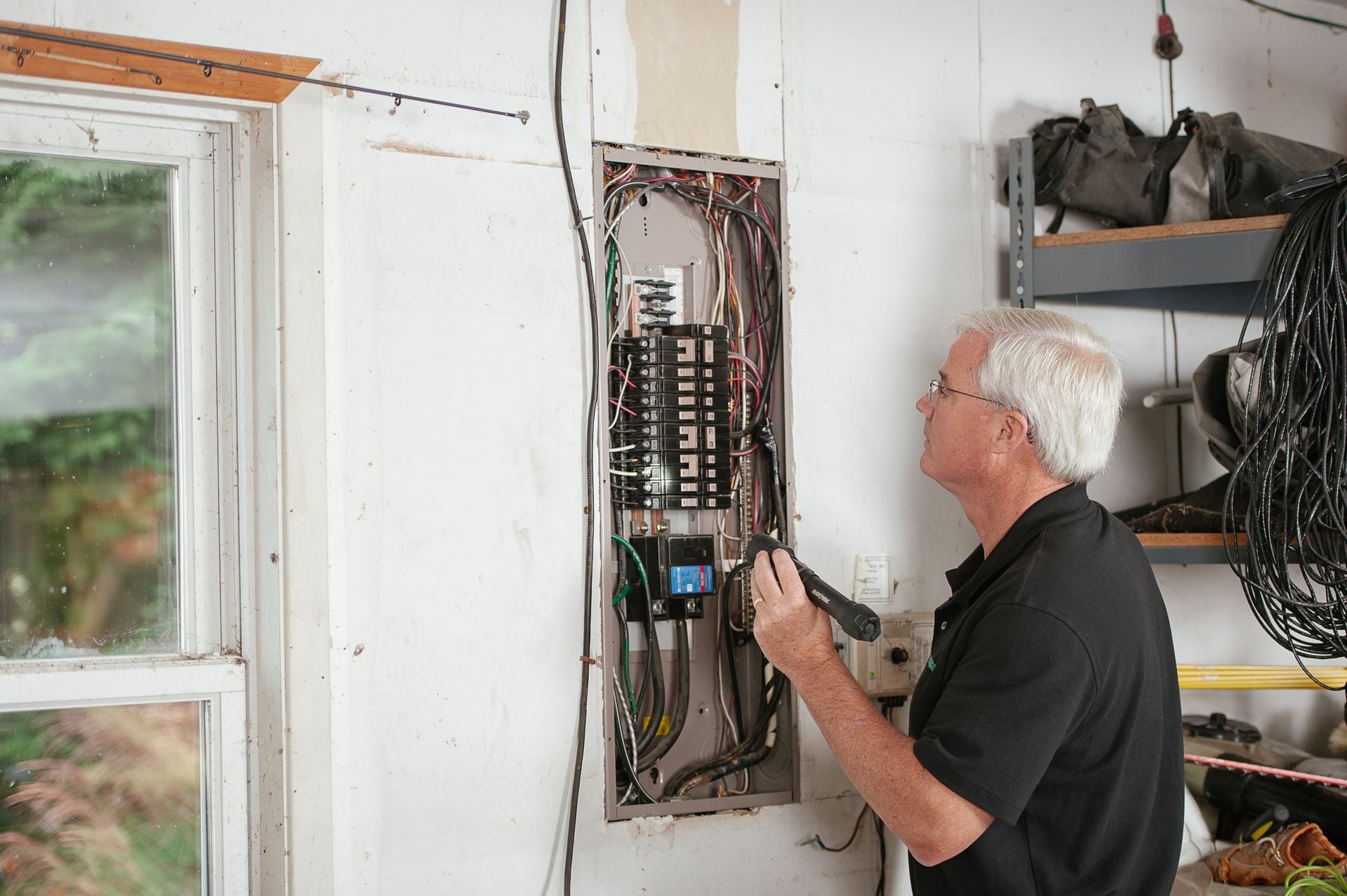
One lesson arrives after the outage ends. Restoration is rarely clean. Power often returns in flickers, or at low voltage while the utility brings sections of the grid back, and those swings are hard on compressors, capacitors, control boards, and the electronics throughout the house. A system that ran fine before the storm and will not start after it is a common call in the days that follow. This is the lesson that turns homeowners toward whole-home surge protection, which mounts at the panel and absorbs the surge before it reaches anything, and toward having the heating and cooling checked after a major outage.
Portable generators have limits
Many households buy a portable generator after a first bad outage, and it is the second one that teaches them what the unit cannot do. A portable unit will run a refrigerator, a few lights, and some chargers. It will not run central air or a heat pump, and it will not run anything wired into the house, such as a well pump or a furnace blower, without a transfer switch, since plugging a generator into a wall outlet sends power back into the utility lines and can kill a line worker. It also needs gasoline every several hours from a station that may not have power either, and it produces carbon monoxide that kills dozens of people a year when a unit runs in a garage or near a window. Portable generators have a place, and the lesson is simply that the place is smaller than the box suggests.
Getting ready before the next season
The preparation that follows from these lessons is manageable, and none of it has to happen at once. Keep a written log of outages and how long each lasted, because that record shows whether your home has an outage problem or an occasional inconvenience. Know where the water main shutoff is, and keep flashlights, a battery bank, and a few days of water where you can find them in the dark. Keep the heating and cooling system maintained, since one already running on a weak capacitor is the one that fails when the power flickers back. Have the panel looked at, since many older panels across Norfolk, Portsmouth, and Chesapeake tolerate surges poorly. And if the log shows a pattern, or if someone in the house depends on power for their health, look at a whole-home standby generator, which starts on its own within seconds, runs on natural gas or propane so there is nothing to haul, and carries the heating and cooling along with everything else.
We are here for the planning as well as the repair
Russell’s American Mechanical has served Hampton Roads since 1977, and every major storm brings the same calls in the same order: no cooling, no hot water, a wet crawl space, dead electronics, and then questions about generators. If you would rather work through those questions before the next storm than after it, schedule a consultation online, through the website chat, or by phone. A technician will review what failed last time and what your home depends on, then lay out the options at everyday pricing without any pressure to choose.