

Every experienced homeowner has a story about their first house, and in Hampton Roads the stories tend to have some common themes. The same handful of missteps show up year after year, carried over from renting, where someone else handled the systems, or from a climate that behaves differently. Here are the ones we see often, why each causes trouble on the coast, and the habit that replaces it for longer lasting home systems.
Never changing the filter
In an apartment, someone else changed the filter, or nobody did and the impact wasn’t noticeable over a shorter span of time. In a house where the air conditioning runs six months a year, a filter packed with dust, pet hair, and pollen chokes airflow, freezes the indoor coil, overheats the blower, and runs up the bill. The habit is to check it monthly during cooling season and change it every one to three months, and writing the date on the frame helps.
Setting the thermostat like an apartment
Renters often ran the thermostat at 68 in summer because utilities were included in the rent or the apartment was small. In a house here, that setting keeps the system running through the afternoon without a break, wears on the compressor, and costs more every month without making the house much cooler, because an air conditioner cools at one rate regardless of the number on the wall. Keep it in the mid to upper 70s, run the ceiling fans, and let it be. A smart thermostat running a schedule removes the temptation altogether.
Forgetting the crawl space exists
Many homes here sit over a crawl space, and a first-time homeowner may never have been in one. It is where the plumbing runs, where the ductwork lives, and where the region’s high water table keeps the ground damp for weeks after a storm. A damp crawl space left to itself rots the insulation, rusts the pipe hangers, and sends musty air into the ducts and on to every room. Take a flashlight under the house once each summer and once each fall. Standing water is a reason to talk about a sump pump, and bare pipe is a reason to buy foam insulation before the first freeze.
Not knowing where the shutoffs are
Too many new homeowners meet the main water shutoff for the first time while water is spreading across a floor. Find it the week you move in, along with the breaker panel and the gas shutoff if you have gas service, and turn the water valve once to confirm it moves. In this area the main is often in the crawl space or at the meter near the street, and a valve that has not been turned in years may not turn at all, which is worth knowing on a calm day rather than during a January freeze.
Ignoring the salt on the coil
Coastal air leaves a haze of salt on the outdoor coil over a summer, and it is not something inland homeowners ever had to think about. That film blocks the airflow the unit needs to shed heat and corrodes the fins and connections over the years. After pollen season, rinse the coil gently with a hose, keep shrubs and pine straw two feet back, and ask about a corrosion-resistant coating when the time comes to replace the unit.
Letting extension cords become wiring
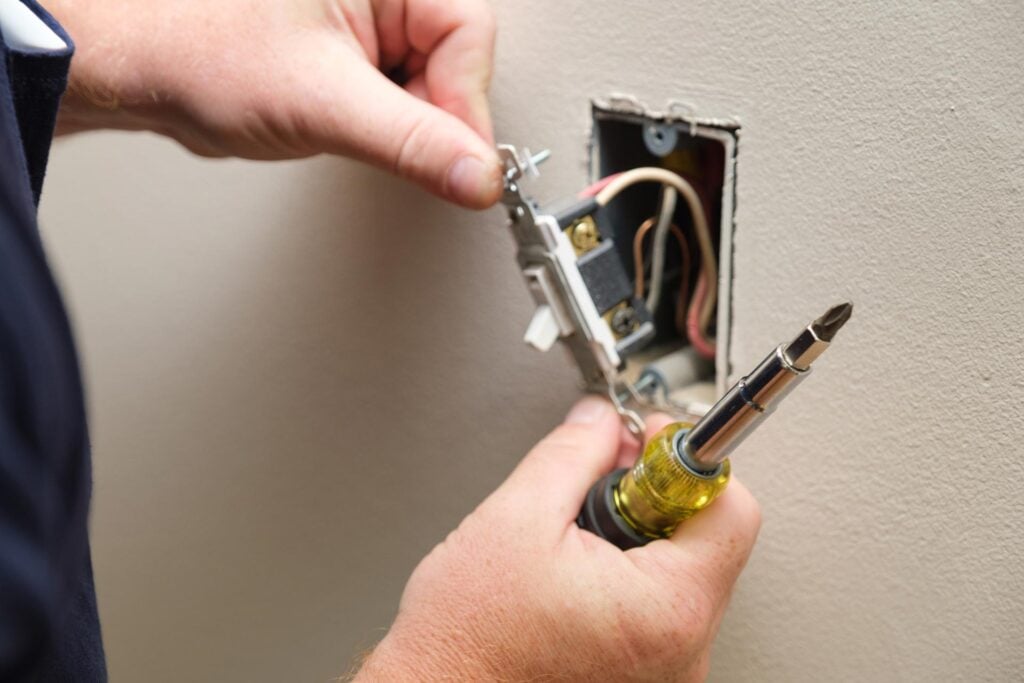
An extension cord is meant for a weekend, and in many first homes one ends up serving a lamp, a television, or a space heater for years, often run under a rug or behind a sofa where it is stepped on and warmed. That is a fire risk, and it usually means a room needs an outlet where the cord ends. Our outlet and switch team adds one in an hour or two, and it is one of the least expensive electrical jobs there is.
Treating the drains like a trash can
When grease goes down the kitchen sink, wipes go down the toilet, and coffee grounds and potato peels go into the disposal, you’ve got a growing problem. A rental’s plumbing may have put up with those habits for a year, but a house’s plumbing will not, and the first Thanksgiving in a new home is often when they produce a backup. Grease goes in a can, every bathroom gets a trash can, and the disposal handles small scraps only.
Forgetting the generator is there
If the house came with a standby generator, it is easy to treat it as part of the landscaping. It runs a short self-test every week, and the mistake is not listening for it. A unit that has stopped exercising, or whose controller shows yellow or red, will not start in a storm either. Learn what day the self-test runs, glance at the controller light now and then, and schedule yearly generator service before hurricane season.
Skipping the tune-ups
A heating and cooling system that never meets a technician keeps working right up until it stops, and it costs more every month along the way. First-time owners skip tune-ups because nothing seems wrong, and then discover two things at the same moment: the compressor gave out years early, and the manufacturer wants service records before it will honor the warranty. In a climate where the system runs half the year in salt air, a spring and a fall maintenance visit are the difference between a 10-year system and a 15-year one.
We are glad to help you start well
Russell’s American Mechanical has served Hampton Roads since 1977, and every mistake on this list is one we have helped someone recover from. If you have recently bought a home, schedule a baseline visit online, through the website chat, or by phone. The technician will tell you the age and condition of your systems plainly at everyday pricing, and the Premium Home Care Agreement can keep the rest of this list from applying to you.