
Two identical heat pumps installed the same year on one Chesapeake street can have very different lives. One reaches 15 years and is replaced on a date its owner picked, while the other quits at 9 in the middle of a heat wave, and the equipment is rarely the reason. It is what happened in the years between, and whether anyone removed the five things that wear a system out on the coast: heat, dirt, vibration, moisture, and salt. This post explains how maintenance adds years to the systems in a Hampton Roads home. It also covers the hazards that make maintenance a safety matter as much as a financial one.
What wears a system out here
Equipment ages according to the conditions it runs in rather than the calendar. Heat degrades capacitors, wiring insulation, and lubricants. Dirt on the coils forces longer run times, dirt in the filter starves the blower, and dirt in the condensate drain backs water up into the system. Vibration loosens every connection and fastener over thousands of cycles. Moisture corrodes connections, rusts heat exchangers and tanks, and nourishes the growth that coats coils and ducts. And salt, which Hampton Roads adds to the list, does what moisture does only faster, on every outdoor coil, connection, meter base, and generator enclosure. Maintenance removes all five on a schedule, so maintained systems spend fewer hours in the conditions that age them.
How maintenance adds years, system by system
- Heating and cooling: a spring tune-up cleans both coils and rinses off the salt film, which lowers compressor temperature for the whole summer, and tests the capacitor under load so it is replaced before it forces hard starts.
- Water heater: a yearly flush clears the sediment that overheats the tank bottom, and changing the anode rod on schedule can add years to the tank.
- Plumbing: a yearly pressure check catches a fading regulator before it strains every joint in the house, and a look under the floor finds the small leak before the framing does.
- Electrical: a yearly inspection tightens the connections vibration loosens and cleans the ones salt corrodes, which is how a panel reaches its full life.
- Generator: a yearly oil change, battery test, and run under load are what separate a 25-year unit from one that seizes during its first long run.
None of these visits is dramatic in itself, but their payoff arrives as extra years at the end of each system’s life.
Carbon monoxide
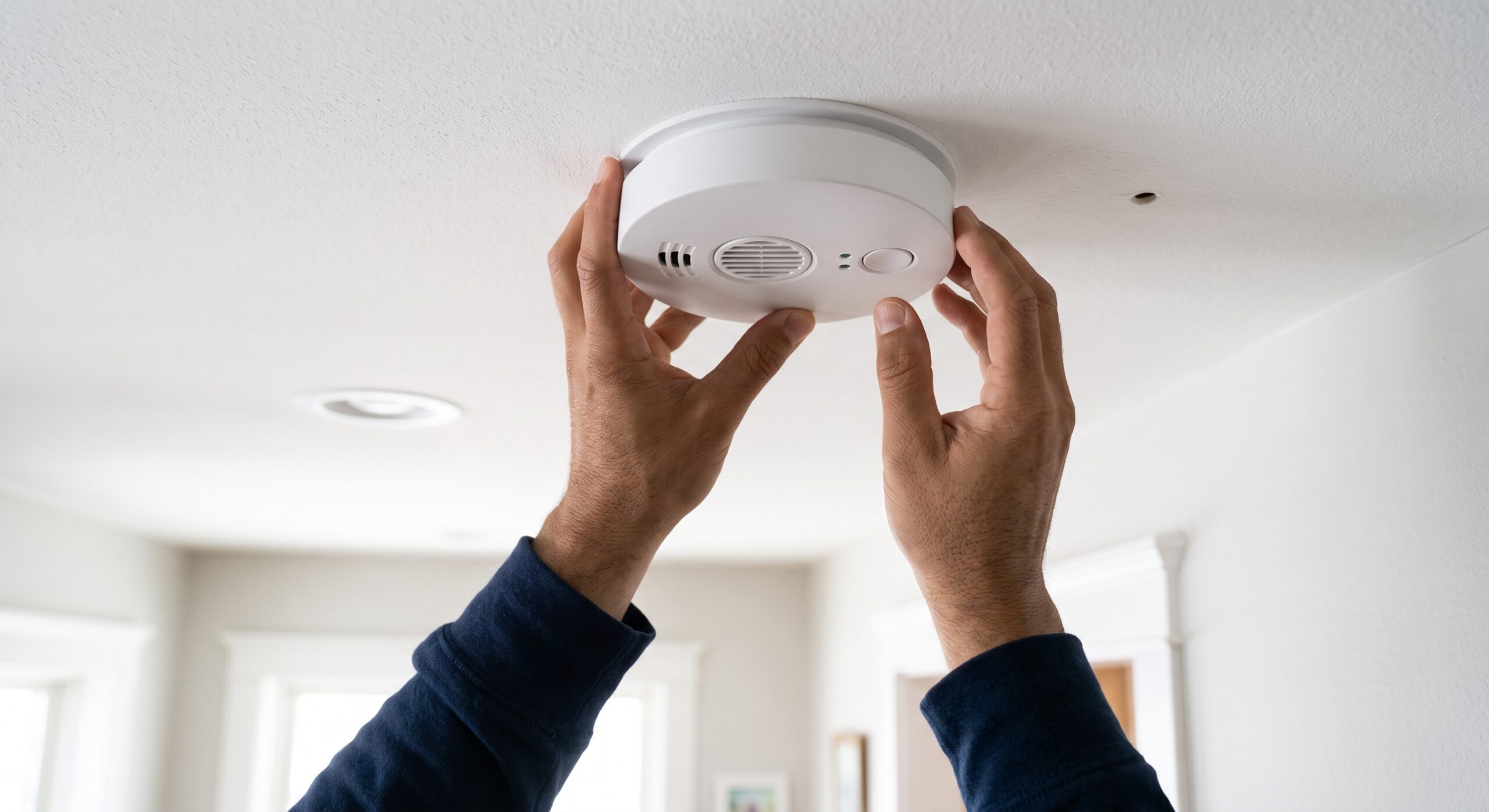
The most serious hazard maintenance protects against is carbon monoxide. A gas furnace, boiler, or gas pack burns fuel inside a heat exchanger, a metal chamber that keeps combustion gases apart from the air in the house. Heat exchangers crack as they age and as they overheat, which a dirty filter causes, and once cracked they can pass carbon monoxide into the supply air. Carbon monoxide cannot be seen or smelled. That is why the fall tune-up includes a heat exchanger inspection. A working detector is the second line of defense, and our smoke and CO services page covers both.
Fire
Most fire risk in home systems traces to electrical faults, and electrical faults are preventable. A loose connection in an air conditioner, an air handler, or a panel builds heat, and heat melts insulation and can ignite dust, while a breaker on an older panel that no longer trips protects nothing. Salt air makes each more likely by corroding connections into resistance. Because Russell’s American Mechanical handles electrical work alongside heating and cooling, the yearly electrical inspection and the equipment tune-ups cover the same fire risks from both ends, tightening and cleaning connections and confirming that the panel’s breakers do their job.
Water and the air you breathe
Water damage is a health matter as much as a financial one, because of what grows in wet material. A condensate drain that overflows into a ceiling, a water heater that fails in a flooded garage, or a supply line that leaks in the crawl space each put water where mold establishes within days, and a damp crawl space feeds spores into the ducts and on to every room. For anyone in the house with asthma or allergies, that is a health problem that started as a plumbing problem. Maintenance clears the drain, flags the water heater, and checks the crawl space yearly, and where the crawl space stays damp anyway, a sump pump or duct cleaning addresses the source.
Outages and the water’s edge
On the coast, two more hazards belong on this list. A standby generator is a safety device for households where someone depends on power, and one that has not been maintained may not start during the storm; yearly service with a load test turns it from an assumption into a plan. And for the many homes here with a dock, a boat lift, or a pool, the wiring at the water’s edge needs proper GFCI protection and bonding and a periodic look, because water and electricity together are a danger a yearly inspection is meant to catch.
Keeping it on the calendar
Your part is the filter, the space around the outdoor unit, the detectors, the GFCI test buttons, and a yearly look under the house. Ours is the spring and fall tune-ups, the yearly plumbing and electrical inspections, and the generator service, and the Premium Home Care Agreement puts that half on a schedule with priority when demand peaks, which matters because the systems that fail in July are usually the ones nobody cleaned in April.
Schedule the visit that does the most
Russell’s American Mechanical has served Hampton Roads since 1977. If your systems have gone a year without professional maintenance, schedule online, use the website chat, or call, and same-day appointments are available by phone when the day allows. The technician will tell you plainly which of the five wear factors is working on your equipment and what removing it involves, at everyday pricing and with the decision left to you.