
If it has been a while since a technician looked at your heating and cooling system, you are in good company. A system that is still running does not seem to need attention, and life in a busy household fills the calendar without help. Systems here do tell you when they are overdue, though, and they tell you in small ways before they tell you in a large one. Here is what to listen for in a Hampton Roads home, what each sign usually means, and what a tune-up does to put it right.
Your power bill
The clearest sign shows up on the bill. Compare this month with the same month last year, allowing for any rate change, and if the system is costing noticeably more to run for the same weather, it is running longer to deliver the same comfort. The usual reasons are a dirty outdoor coil that cannot shed heat, a dirty indoor coil that cannot absorb it, a low refrigerant charge, or a filter that has been in too long. On the coast, the outdoor coil picks up a haze of salt over a summer that no inland coil sees, and it quietly cuts the coil’s ability to do its job until someone rinses it.
The air in the house
Hampton Roads humidity is the reason a house can be cool and still feel uncomfortable. An air conditioner pulls moisture out of the air only while it runs in long, steady cycles, so a system that starts and stops on a dirty coil or a low charge cools the room without ever drying it, and the house sits at 74 degrees feeling sticky. Damp floors, condensation on the windows, and a musty smell in the closets in midsummer are the signs. A musty smell each time the system starts is a related one, and it means growth on the indoor coil or in the drain pan, which returns quickly in this climate on a coil that has not been cleaned.
A room that is never comfortable
When the bedroom at the end of the hall is warmer than the rest of the house in summer and colder in winter, the cause is almost always airflow. A blower that has slowed, a duct joint that has separated in the attic or the crawl space, or a coil dirty enough to restrict air will starve the rooms farthest from the unit first. It is tempting to compensate by lowering the thermostat, which over-cools the near rooms and raises the bill without helping the far one. A tune-up measures airflow and static pressure and finds where the air is being lost, and if a duct is the reason, our duct cleaning and sealing team can take it from there.
New sounds from your home’s systems
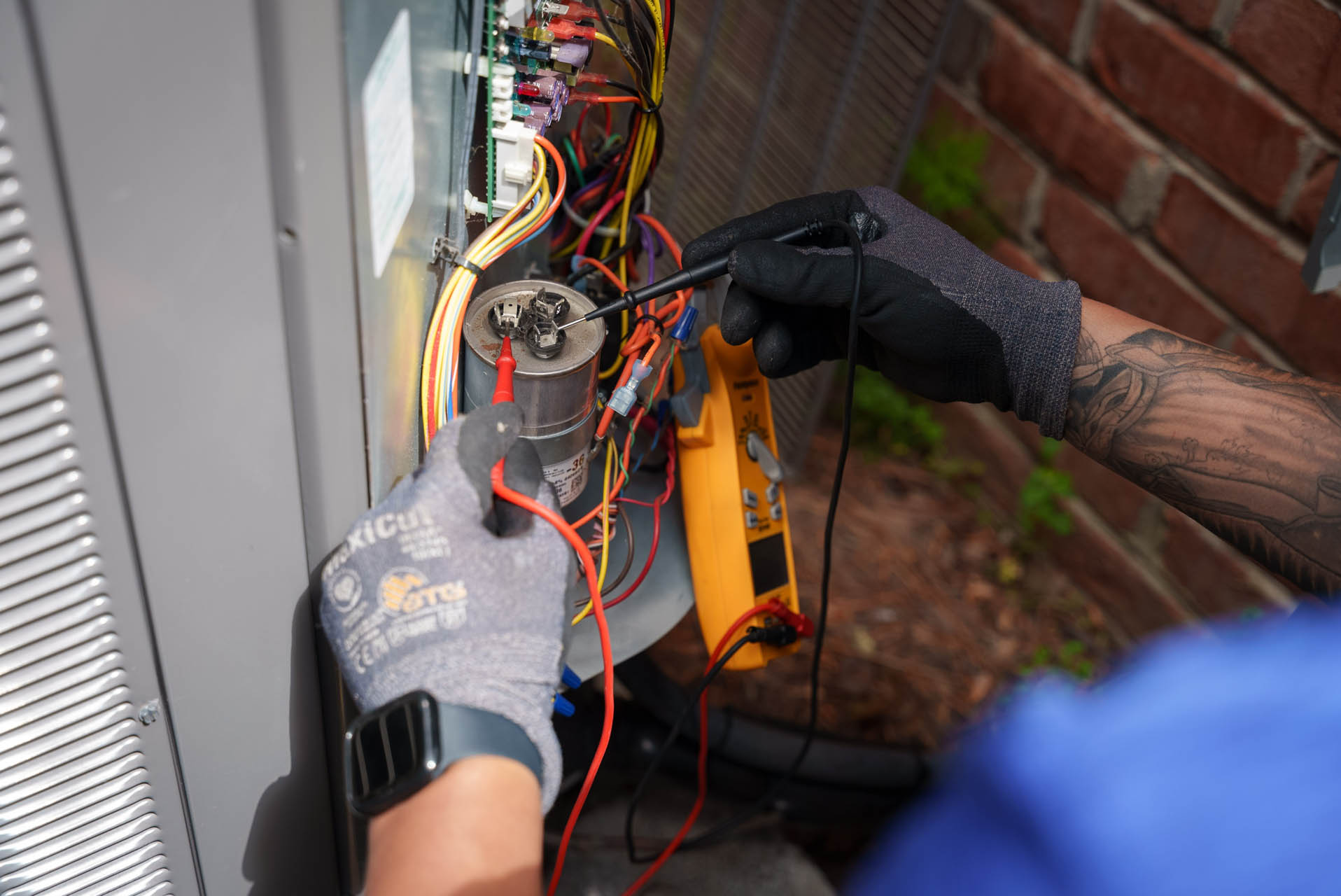
A system you have lived with for years has a sound you stop hearing, so new sounds are worth noticing. Squealing or grinding usually means a bearing in a motor, and a motor allowed to seize takes other parts with it. Rattling usually traces to a loose panel or a blower wheel that has fallen out of balance. A click that repeats at the outdoor unit without the compressor starting is a contactor or capacitor on its way out, and salt air corrodes both faster than inland air does. A system that starts and stops every few minutes, or runs for an hour without reaching the set point, is telling you about the compressor’s workload, and the compressor is the one part nobody wants to replace.
The drain pan
Water around the indoor unit, a stain on the ceiling below an attic air handler, or a float switch that keeps shutting the system down all trace back to the condensate drain. In this climate, that drain runs wet for six months straight, and algae and sludge build in it every season. Clearing and treating the line is a routine part of maintenance, and skipping it is one of the more common reasons a system shuts itself off on a hot day with nothing mechanically wrong.
What a tune-up does about each one
Every sign above is something a technician measures, cleans, or tightens during a maintenance visit. The coils are cleaned, which brings efficiency and dehumidification back. The refrigerant charge is measured and corrected. Airflow and static pressure are measured, which points to a duct problem if there is one. The capacitor and motors are tested under load and replaced when they show weakness, which is how a small part is kept from becoming a large one. The drain line is cleared and treated. And the electrical connections that loosen with vibration and corrode in coastal air are cleaned and tightened, which is the quiet reason maintained systems here rarely have electrical trouble. Our maintenance visits are built around that list.
Staying ahead of it without having to remember
Russell’s American Mechanical has served Hampton Roads since 1977, and the systems that fail in July are usually the ones that showed these signs in April. The Premium Home Care Agreement puts two heating and cooling visits a year on the calendar for you, along with priority scheduling when the first heat wave fills the phones and reduced rates on any repair the visits find. You can schedule online, use the website chat, or call, and same-day appointments are available by phone when the day allows. The technician will explain which of these signs your system is producing and why.