
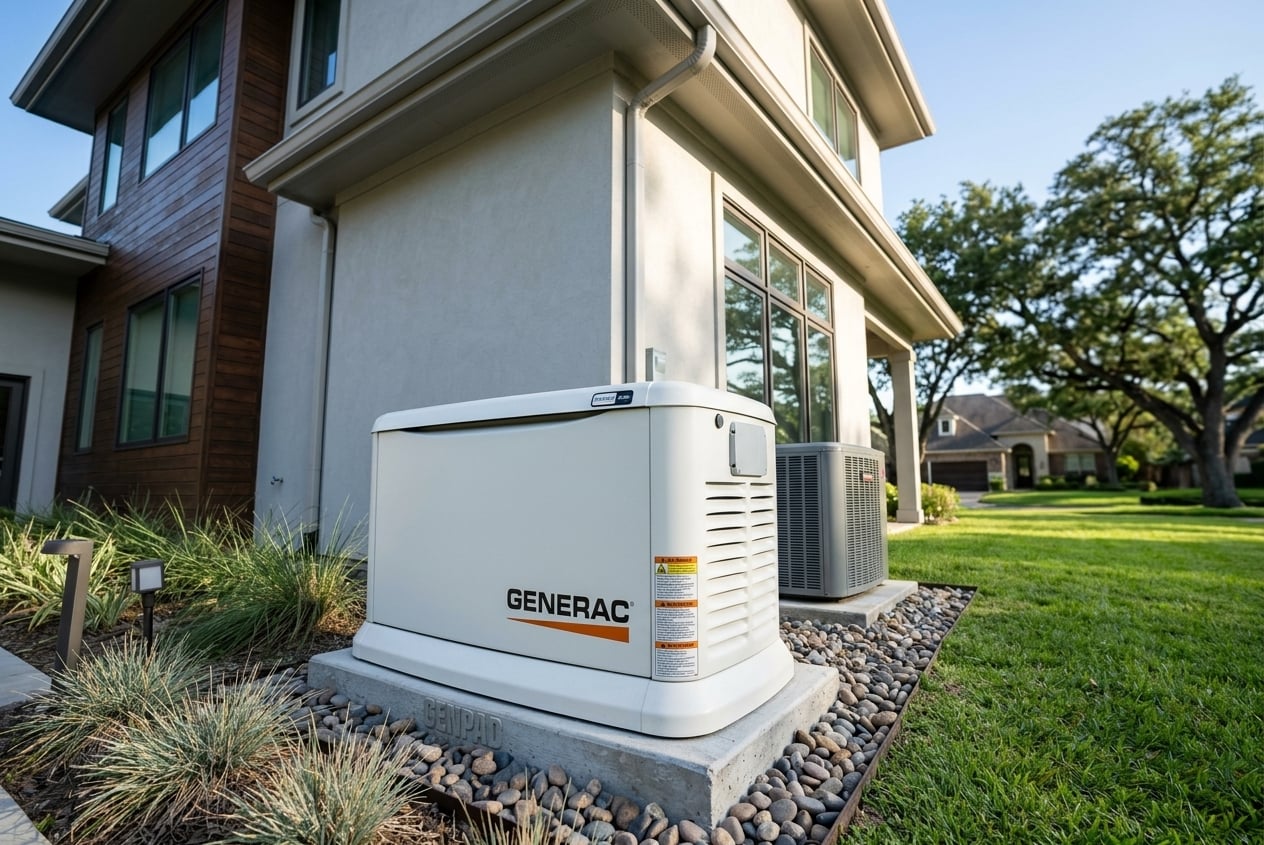
Your standby generator is the one system in your home you cannot test simply by living with it. It sits outside doing nothing for months, and then a hurricane, a nor’easter, or a summer thunderstorm asks it to start on the first try and run for days. Whether it does depends almost entirely on the care it received while it was sitting. On the coast that care matters more than it does inland, because salt air is working on the unit the whole time. Here is how a generator lets you know that service is overdue, starting with the signs you can catch from the kitchen window.
Signs you can catch from the house
A standby generator runs a short exercise cycle every week to keep the engine lubricated and the battery charged, and homeowners learn to hear it and then stop noticing it. If you think about it and cannot remember the last time you heard the generator run, that is the most important sign on this list, because a unit that has stopped exercising, or has been trying to start and failing, will not start in an outage either. The controller’s indicator lights are the second thing to check. Green means ready, yellow or amber means maintenance is due or a minor fault has been logged, and red means a fault that will keep the unit from starting. People walk past yellow for months, and yellow is exactly when service is inexpensive. If you happen to hear the self-test and the engine cranks slowly or takes two or three tries to catch, the battery is weakening, and it will fail a cold start in a January storm long before it fails a warm one in October.
Signs that need the enclosure opened
The rest of the signs are inside the cabinet, and they are the ones a coastal generator collects fastest. Salt air corrodes the battery terminals and the electrical connections over a few seasons, and it pits the enclosure itself if the finish has been scratched. Oil or coolant on the floor of the enclosure or on the pad means a leak that will grow, and an engine that runs low on oil during a multi-day outage shuts itself down or, if the sensor has failed, damages itself. The enclosure is warm, dry, and out of the weather, which makes it attractive to mice and wasps, and their nests foul the controller and the air intake. Pine straw, leaves, and sand collect against the louvers. None of this is visible from the house, which is why the yearly visit includes opening the cabinet and looking.
Signs in how it runs
When the generator does run, it should settle into a steady hum within a few seconds. An engine that surges up and down, runs rough, or produces visible exhaust smoke is telling you about the fuel system, the air filter, the spark plugs, or the oil, and on a natural gas or propane unit, a fuel pressure problem at the regulator or supply line shows up the same way. Any of these gets worse under a full load, which is the load the generator exists for, and a unit that runs a little rough during a five-minute self-test may not run at all through a five-day outage.
After it carried you through a storm
The sign people miss is the one that feels like good news. A generator that ran for days during the last storm did more work in that one week than in a year of weekly self-tests. It consumed oil, wore the air filter, ran the battery through repeated cycles, took salt spray across the enclosure, and may have logged faults you never saw. The right response to a generator that performed well is to service it before it is asked to perform again, and the interval between oil changes should be counted in hours run rather than months on the calendar.
What the yearly service covers
A generator maintenance visit changes the oil and filter, replaces the air filter and spark plugs as needed, tests the battery under load and replaces it on schedule, checks the fuel supply and pressure, cleans and tightens every connection, inspects the enclosure for corrosion, pests, and debris, reviews the controller’s fault log, and runs the unit under a full load rather than the light load of a self-test. Our generator service visits follow that sequence, and the technician explains anything that needs attention and prices it before doing it. The Generator Care Agreement covers that yearly visit and takes 20 percent off service and diagnostic fees and 15 percent off parts and labor on any repair, which is a sensible arrangement for a system that only has to work on the worst day of the year.
Schedule it while the weather is calm
Russell’s American Mechanical has served Hampton Roads since 1977 and installs and services standby generators across the region. If your generator is showing any of the signs above, or if you cannot remember its last service, schedule a visit online, through the website chat, or by phone. The best time to find out whether a generator will start is a quiet afternoon in the off-season, not the first night of a hurricane, and we would be glad to help you find out.