
When you call about a problem, there is usually one thing you would like to hear, and that is a price. That is fair, and we would give it to you over the phone every time if we could do so accurately. What we can promise is the cost of the visit up front and the cost of the repair to the dollar once we have seen the system. This post explains why the visit has to come first, using problems that come up in Hampton Roads homes across all four trades we handle. It also explains why that order works in your favor.
One symptom, several possible causes
Take a common summer call in Chesapeake: the air conditioner is running, but the house will not get below 78. Behind that one symptom could be a failed capacitor, a refrigerant leak, a dirty evaporator coil, a clogged condensate drain, a failing compressor, a separated duct in the attic, or a system undersized for the house from the start. The least expensive of those costs less than a tank of gas, and the most expensive is a whole new system. The only fair way to know which one you have is to test, and that is why our air conditioning repair visits begin with a meter and a set of gauges instead of a price sheet.
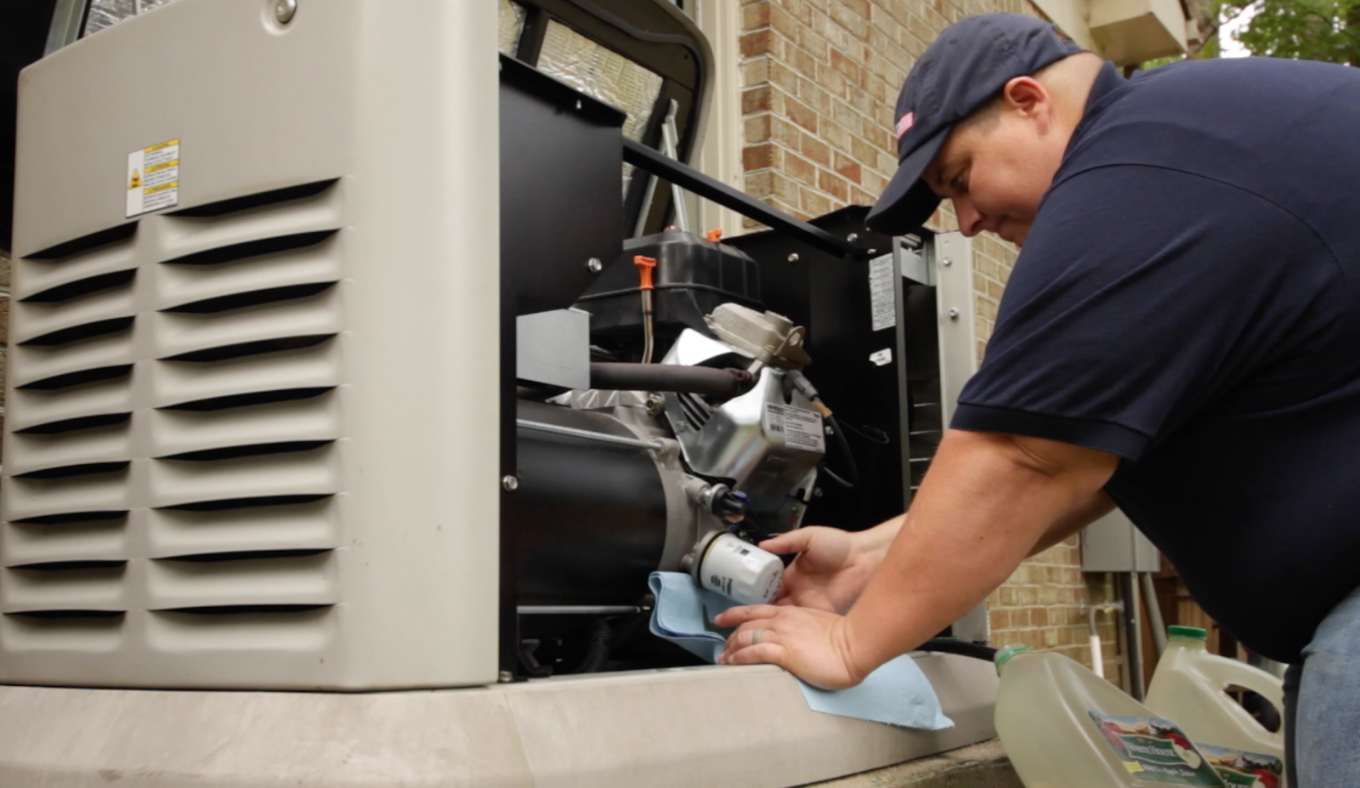
The same is so across the rest of the house. A breaker that keeps tripping might be an overloaded circuit, a failing breaker, a shorted appliance, a damaged wire, or a panel at the end of its life, and each is a different repair at a different price. A water stain on a ceiling could be a supply line, a drain line, a shower pan, a toilet seal, or nothing more than condensation on a duct. A generator that would not start during last week’s outage may have a dead battery, a fuel problem, or a controller fault. None of those can be told apart from a description alone.
What tends to go wrong with a phone quote
Price a repair before anyone has seen it, and one of three things tends to happen. Sometimes the estimate happens to be right, and everyone breathes a little easier. More often, the technician arrives, finds something different, and you find yourself hearing a new number in your own living room, which is the surprise you were trying to avoid. And sometimes the estimate has been padded to cover whatever might turn up, which means you pay for problems you never had. An accurate quote is a price for a specific repair to a known problem, and the problem is not known until it has been tested.
There is a second reason the visit matters, and it is the one that saves money over time. A problem often has a second cause sitting behind the first. A failed capacitor may have been worn down by a motor drawing too much current, and if the motor stays, it will wear down the next capacitor as well. A breaker may trip because the panel behind it is failing, and replacing the breaker leaves the panel. A drain that clogs every few months may have a root in the sewer line that clearing alone will not cure. Our technicians are trained to look for the cause behind the cause so the repair holds, and to explain what they find.
What the technician measures
- Voltage and amperage on motors, which show whether a motor is failing before it stops.
- Refrigerant pressures and temperatures, which tell whether the charge is low, and a leak detector, which finds where it is escaping.
- Static pressure in the ductwork, which shows whether airflow is the underlying problem.
- Gas pressure and combustion readings on a furnace, which tell whether it is burning cleanly and safely.
- Voltage at outlets and at the panel, along with the condition of connections, which separate a bad breaker from a bad circuit from a panel at its limit; our circuit breaker work often begins here.
- Water pressure at the fixture and at the main, which tells a local problem from a house-wide one.
- A camera run through a drain or sewer line, which shows the blockage and the condition of the pipe around it.
- A generator’s controller log and a run under load, which show whether it will carry the house when the power goes out.
Why coastal conditions make testing matter more
Hampton Roads produces symptoms that point at the wrong part. Salt air corrodes outdoor connections, so a heat pump that seems to have a bad compressor sometimes has nothing worse than a corroded contactor. A high water table makes a wet crawl space look like a plumbing leak, and the other way around. Long, humid summers fill coils and condensate drains with growth, so a cooling problem that sounds mechanical is often a drainage problem. Summer thunderstorms and the surges after an outage take out capacitors and control boards in ways that mimic larger failures. A visit untangles these; a phone call cannot.
When a quote can come first
Replacement works differently, and we are happy to quote it up front. Pricing a new heating and cooling system, a water heater, a standby generator, or a panel upgrade does not require diagnosing a failure, only measuring the home, looking at the ductwork, gas supply, or electrical service, and matching equipment to the load. That is an in-home consultation rather than a diagnostic visit, and it produces a firm installation price, with financing available. If you are weighing repair against replacement, ask for both numbers and take your time.
Schedule the visit
Russell’s American Mechanical has served Hampton Roads since 1977. To book a diagnostic visit, you can schedule online, use the website chat, or call, and same-day appointments are available by phone when the day allows. The price you receive will be for the problem you have, at everyday pricing, and you will hear it before work begins.