

Putting off a heating and cooling problem is rarely a decision anyone makes on purpose. The symptom looks minor, the week is full, and the system is still cooling the house, so it waits. What makes these particular problems worth a second thought is that they do not stay the size they are. Each one works on a part that costs more than the repair would have, and on the coast, salt and humidity hurry that process along until an HVAC emergency happens., Here are five we see often in Hampton Roads homes, how each one grows if it waits, and what handling it now looks like.
The filter that stayed in too long
It begins with the smallest chore in the house. Once a filter is loaded with dust, pet hair, and spring pollen, airflow drops, and the system reacts in stages: the indoor coil runs too cold and frosts, the blower fights the restriction and overheats, and eventually a safety switch shuts the whole thing down while the compressor has been laboring the entire time. Handling it now costs a filter and a monthly reminder on your phone, which makes this the least expensive item here and the only one that is entirely in your hands.
A refrigerant leak that does not seem urgent
A system running a little short on refrigerant keeps cooling, only less well, so the afternoon cool-down takes longer and the power bill drifts upward in ways that are easy to attribute to the weather. As the charge keeps falling, the coil starts to ice over and the compressor operates well outside the conditions it was designed for, and that is the path by which a small leak turns into a compressor replacement. Handled now, the technician finds the leak, repairs it, and recharges the system during a routine visit. Left for two summers, the bill often covers a compressor, a coil, and a full charge, and on an older system that total usually tips the decision toward replacement.
A drain line out of sight
Coastal air carries a lot of moisture, and an air conditioner wrings gallons of it out every day, all of which leaves through a narrow condensate line that algae colonizes each summer. At first the only hint is a bit of water in the pan or a musty note when the system starts. Then the pan fills and spills, and since many air handlers in this area are in attics, the spill lands on a ceiling. A float switch, where one is installed, stops the system before that point, which is the reason a surprising number of no-cooling calls on hot afternoons end with a cleared drain. Handled now, the line is flushed and treated as part of maintenance. Left alone, the invoice can include drywall later on.
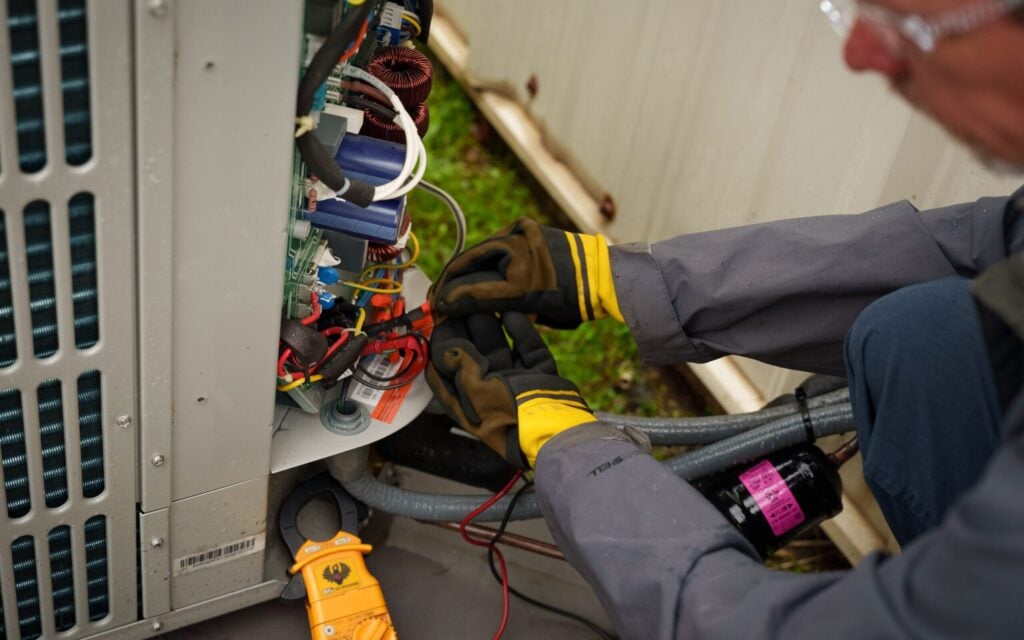
The capacitor and contactor that salt is wearing down
Inside the outdoor unit, the capacitor gives the compressor and fan the push they need to start, and the contactor is the relay that hands them power when the thermostat calls. Heat and cycling wear both, and here the salt in the air joins in. The first hints are easy to overlook: a hum lasting a second before the fan turns, a system that needs two tries, a click that repeats without a start. Meanwhile the motors draw extra current at every start and heat their windings, and the contactor’s pitted contacts arc a bit more each day. Handled now, these are two inexpensive parts tested and swapped during a tune-up. Left alone, the failed part is the compressor, and that’s a significantly more expensive fix.
Corroded connections
Every wire in the outdoor unit and the disconnect box terminates at a screw or lug, and coastal humidity works on those terminations in a way inland homes rarely see. Corrosion adds resistance, resistance makes heat, and heat cooks insulation and scorches terminals. Early on the system runs some days and not others, or a faint hot smell comes and goes near the unit. Later a terminal fails outright, or the heat has traveled back along the wiring toward the panel. Handled now, the connections are cleaned and tightened at every maintenance visit, which is why we do it. And because Russell’s American Mechanical does electrical work along with heating and cooling, a damaged disconnect or circuit is addressed by the same technician on the same visit.
Why the clock runs faster here
All five of these problems grow with run time and with how hard the surroundings are on the equipment, and Hampton Roads provides plenty of both: cooling from April into October, humidity that lingers, and salt in the air year-round. A capacitor that would have survived another winter inland gives out in July on the coast, and a drain that would have stayed clear through a shorter summer clogs during a six-month one. The failures also tend to arrive together, in the first heat wave, when every company in the region is booked. Members of the Premium Home Care Agreement move to the front of the line in those weeks, but the better outcome is to have the problem found in April.
Catching it while it is small
Russell’s American Mechanical has served Hampton Roads since 1977. If your system is showing any of the early hints above, our maintenance visits are designed to find them, and air conditioning repair handles the ones that have already grown. Scheduling is online, by website chat, or by phone, with same-day appointments available by phone when the day allows. The technician will explain what was found and lay out the options at everyday pricing, and today’s price is the lowest it will be.
