
The beach chairs are out and the boat is uncovered, and the air conditioner is about to be asked to work every day until October. Is your AC ready for the challenge? Pick a warm afternoon in April or May and run the five checks below. By the end you will know whether the system is ready for summer, needs a repair before the heat, or is heading into its last season and deserves a plan. Each check takes a few minutes, and none of them requires tools.
1. The twenty-minute run
Set the thermostat five degrees below the room temperature and let the system run for twenty minutes. Then hold a thermometer at a supply vent and another at a return grille. A healthy system delivers air about 15 to 20 degrees cooler at the vent than at the return. A smaller difference on a system that is otherwise running points to a low refrigerant charge, a dirty coil, or a compressor that is losing capacity, and each is a repair worth making in spring. If the difference is fine but the house is not cooling, the air is being lost in the ducts.
2. The startup listen
Stand by the outdoor unit while someone turns the system on. The fan and compressor should start together within a second or two with a steady hum. A hum that lasts a moment before the fan catches, a click that repeats, or a unit that starts on the second try is a capacitor or contactor near the end of its life, and salt air shortens the lives of both. Either is an inexpensive part in April and a compressor in August. Grinding or a metallic rattle points to a fan motor or a loose blade and should stop the test until someone has looked.
3. The coil and the cabinet
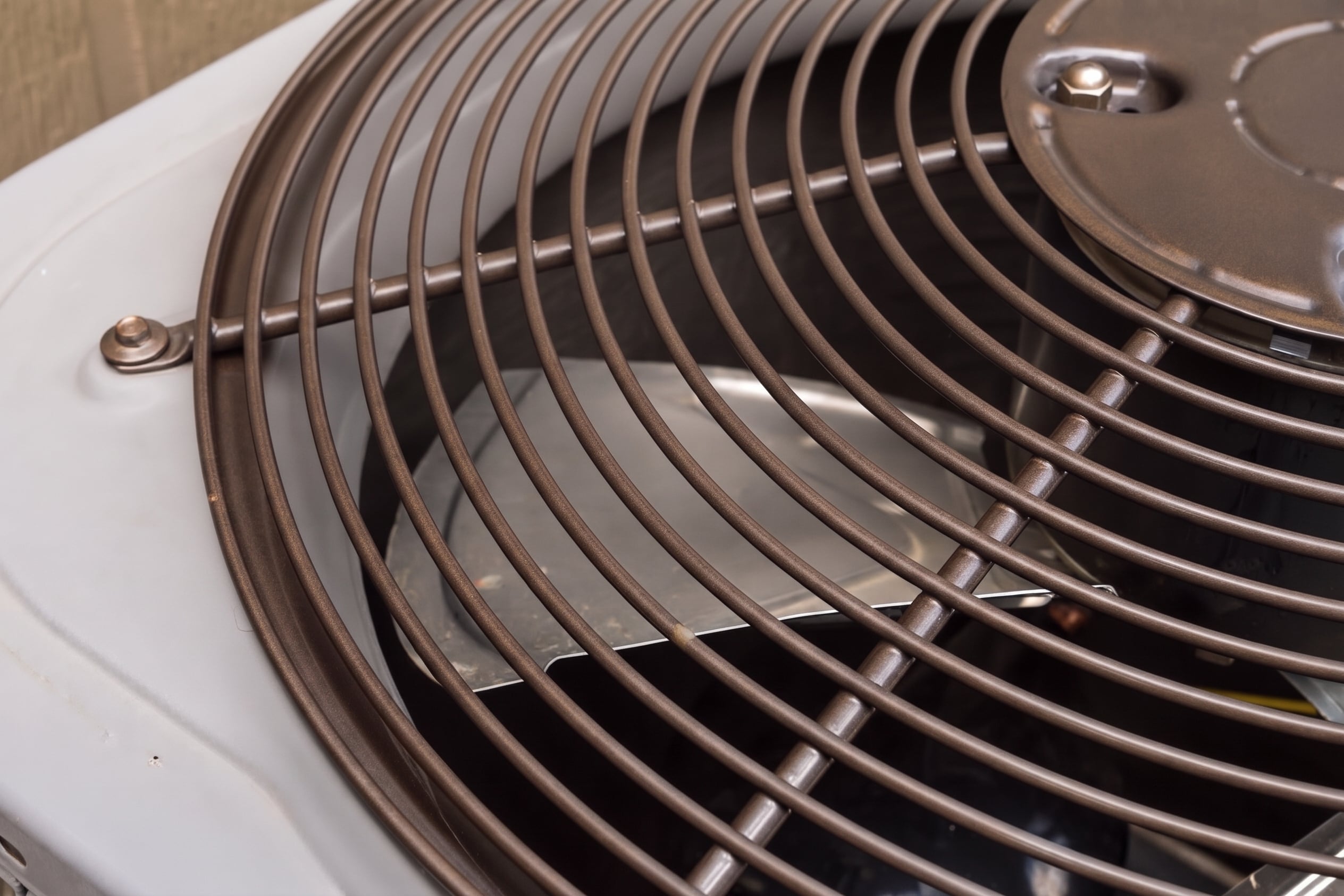
Look at the outdoor coil through the grille. A gray or white haze on the fins is salt and pollen, and it blocks the airflow the unit needs to shed heat; a gentle rinse with a hose from the inside out clears it. Look at the fins themselves for corrosion, which appears as pitting or white powder on the aluminum, and at the cabinet’s seams and the disconnect box for rust. A unit that is corroding is a unit whose remaining summers are numbered, and knowing that in spring is far better than learning it in a heat wave.
4. The drain and the pan
With the system running, look at the condensate line where it exits the house or the pan beneath the indoor unit. Water should be dripping steadily from the drain during a humid afternoon. A dry drain on a running system in coastal humidity means the line is blocked and the water is going somewhere else, usually the pan, and a full pan means the float switch is about to shut the system down on the first hot day. Clearing and treating the line is a routine item, and if the indoor unit is in the attic, this test is the one that saves a ceiling.
5. The age
Read the manufacture date on the outdoor unit’s nameplate. A heat pump or air conditioner in coastal air lasts about 12 to 15 years with maintenance, and one that is past 12 and failed any of the tests above is a candidate for replacement rather than repair, since a large repair on an old system buys a summer or two at most. A system under 10 that failed a test is almost always worth repairing.
Reading your results
- Passed all five: the system is ready. Change the filter monthly through October and schedule a maintenance visit if it has been more than a year, so the readings a technician takes confirm what the tests suggested.
- Failed one or two and the system is under 12 years old: schedule a repair visit now, while the part is small and the calendar is open, and ask the technician to check the rest of the system while there.
- Failed two or more and the system is past 12 years: ask for both a repair quote and a replacement quote, and take your time with them. Spring is the season when that decision can be made calmly, and it is worth asking about 10-year worry-free system coverage on a new installation.
Before the first hot week
Russell’s American Mechanical has served Hampton Roads since 1977, and every spring we would rather see a system in April than meet it for the first time in a July heat wave. If your system failed a test, schedule online, use the website chat, or call, and same-day appointments are available by phone when the day allows. The technician will confirm what the test suggested, explain it, and lay out the options at everyday pricing, and members of the Premium Home Care Agreement move to the front of the line when the season turns.
