
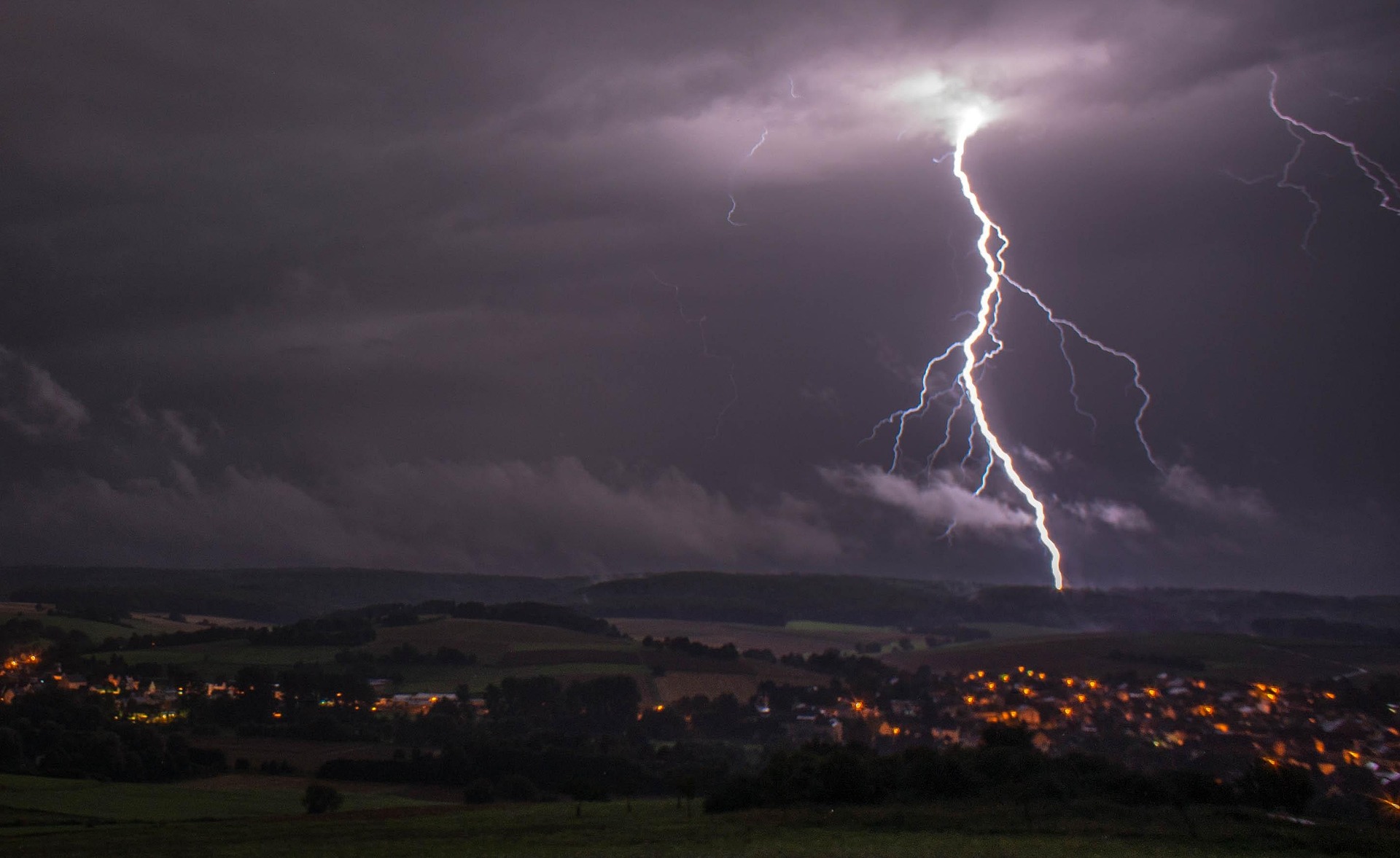
A power surge lasts a fraction of a second, but it can end a control board that cost hundreds of dollars or shorten the life of a compressor that cost thousands. Hampton Roads sees more surges than most places, between the summer thunderstorms and the outages that follow tropical systems and nor’easters. The utility’s work restoring power afterward adds more. Protection against surges is layered, mostly inexpensive, and largely a one-time job. This post explains where surges come from here and how they damage equipment. It then covers the four layers of protection that stop them.
Where surges come from
Three sources account for nearly all of them. Lightning is the one people think of, and a strike on a line blocks away sends a spike down the wires into every home on the circuit. Utility switching is the second and the most common on the coast, because power returning after an outage rarely comes back cleanly; it flickers, arrives at low voltage, and spikes as the grid is reconnected, and the week after a storm is when the region’s surge damage happens. The third source is inside the house, where every large motor, whether the compressor, the well pump, or the dryer, releases a small spike when it stops, and a home produces thousands of these a year, none large enough to notice and all wearing on electronics a little at a time.
How a surge damages equipment
Modern equipment runs on electronics designed for a narrow voltage range, and a surge pushes past it. A large spike burns a control board outright, which is why a thermostat can be dead the morning after a storm. The smaller surges are quieter and costlier over time, since each degrades the components on a board a little, so a furnace board that should have lasted fifteen years fails at eight with nothing to connect the failure to. In a heating and cooling system, surges take out the capacitor, the contactor, and the board, and a low-voltage return after an outage can burn out a blower motor or strain a compressor. Our post on which systems an outage or surge can damage covers the signs by system.
1. Whole-home surge protection at the panel
The first and most important layer is a surge protective device mounted at the electrical panel, where it intercepts a surge before it reaches any circuit in the house. It protects everything that cannot be plugged into a surge strip: the heat pump, the air handler, the water heater, the well and sump pumps, the range, and the wiring itself. A whole-home surge protector is installed by an electrician in about an hour, has an indicator that shows it is still working, and costs a small fraction of the compressor it protects. On the coast, where restoration surges follow every major outage, it is the most cost-effective protection a homeowner can add.
2. Point-of-use protection at the equipment
The second layer is the surge strip or surge-protecting outlet at the equipment, which catches what the panel device lets through and the small surges generated inside the house. Televisions, computers, gaming systems, and the router belong on a surge strip rather than a plain power strip, and the difference is printed on the label as a joule rating. A strip that has absorbed a large surge has usually spent itself doing so and should be replaced; the indicator light tells you. For the heating and cooling system, a dedicated surge protector at the outdoor unit’s disconnect adds a second layer for the most expensive equipment in the house.
3. Sound grounding
A surge protector works by sending excess voltage to ground, and it can only do that if the home’s grounding system is sound. Older homes across Norfolk, Portsmouth, and older Chesapeake sometimes have grounding that was adequate when installed and has corroded since, especially at the ground rod and the connections salt air reaches. A protector on a poorly grounded system has nowhere to send the surge. An electrical inspection tests the grounding and bonding, and correcting it is part of making the other layers work.
4. Inspection and maintenance
The last layer is looking, because surge protectors at the panel and at outlets wear out with every surge they absorb, and checking their indicators after a storm is a two-minute habit. An annual electrical inspection confirms the panel device is intact, tests the grounding, and looks for the damaged breaker or scorched connection a past surge may have left. And the heating and cooling tune-up tests the capacitor and contactor under load, which catches the surge damage that shortens their lives before it takes the compressor.
What to do before the next storm
- Have a whole-home surge protector installed at the panel if the house does not have one, and confirm its indicator shows it is working if it does.
- Put every electronic device that matters on a surge strip with a joule rating, not a plain power strip, and replace strips that have taken a hit.
- Ask about a dedicated protector at the outdoor unit for the heating and cooling system.
- Have the grounding checked during the next electrical inspection, especially in an older home or one where outdoor connections show corrosion.
- During a storm, unplug what you can, and after an outage give the system a few minutes before judging it.
One visit for the whole layer
Russell’s American Mechanical has served Hampton Roads since 1977, and because our electricians and our heating and cooling technicians work under one roof, the panel protector, the grounding, and the equipment can be addressed in one visit rather than three. Scheduling is online, by website chat, or by phone, and same-day appointments are available by phone when the day allows. The technician will explain what the house has, what it lacks, and what each layer costs at everyday pricing, and members of the Premium Home Care Agreement receive the annual electrical inspection that keeps the protection working.
