
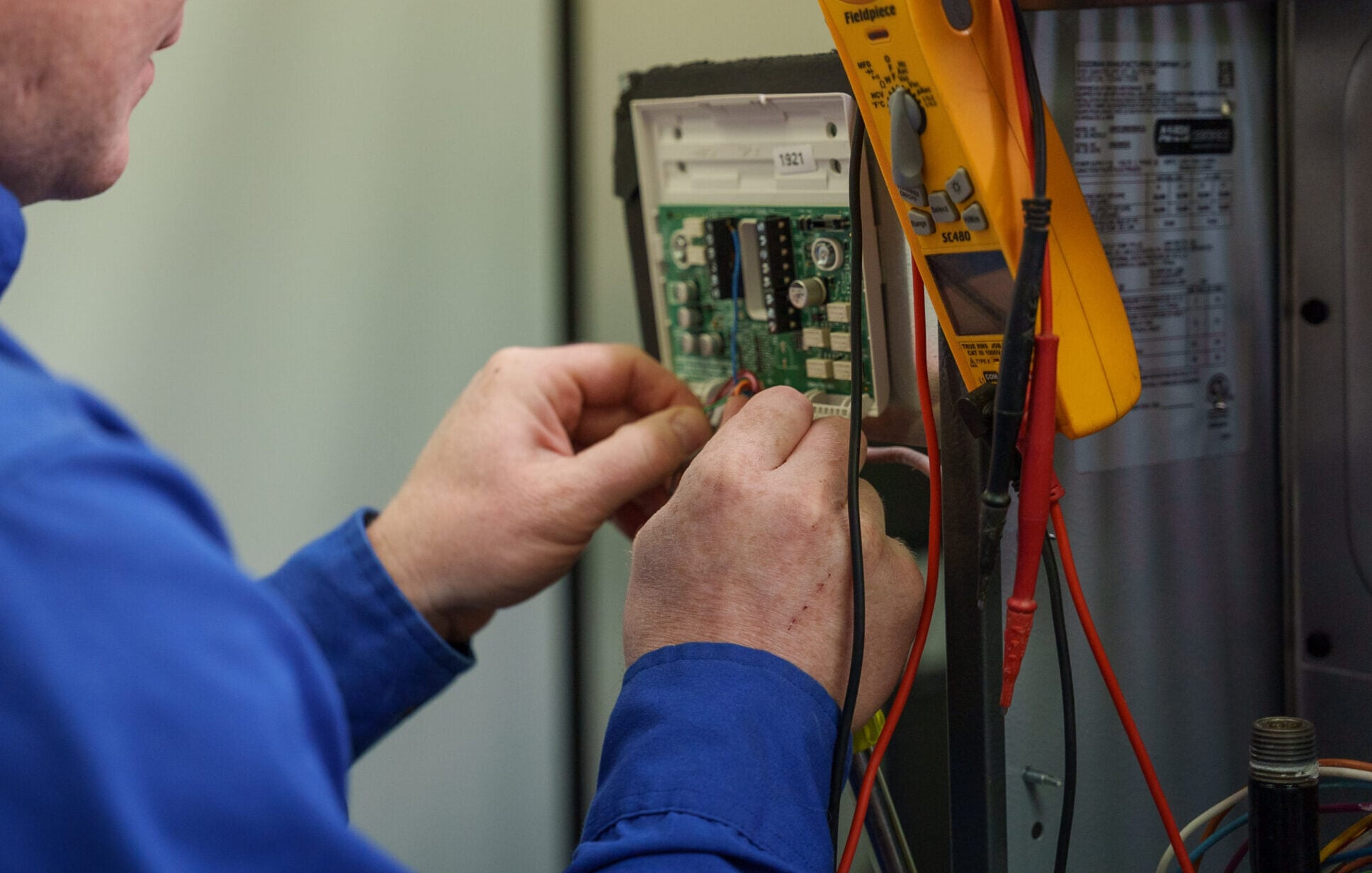
Of all the systems in a home, the electrical system is the one most people never think of as needing maintenance. It has no filter to change and no tune-up on the calendar, and it works silently for decades. It does age, though, and in Hampton Roads it ages a little faster, because salt air works on every outdoor connection and the region’s older housing carries panels and wiring from an earlier era. The signs below are how an electrical system asks for attention. Each is a reason for a look by an electrician.
Things you can see
Lights that flicker or dim when a large appliance starts point to a circuit near its limit or a loose connection somewhere along it. Scorch marks or discoloration around an outlet or switch plate mean a connection behind it has been running hot. A panel with rust, water staining, or corrosion on the breakers or the bus bars has been exposed to moisture, which is common in coastal garages and utility rooms. Outlets with only two prongs, or a kitchen and bathroom without GFCI protection, tell you the wiring predates current safety practice. And a panel of 100 amps or less in a home with central air, an electric water heater, and modern appliances is often a panel doing more than it was built for; many older homes across Norfolk, Portsmouth, and Chesapeake still have one.
Things you hear, feel, and smell
A panel or an outlet should be silent. Buzzing, crackling, or sizzling from either means electricity is arcing across a bad connection, and that is a reason to call soon rather than later. An outlet, switch plate, or breaker that feels warm to the touch is carrying more current than it should or has a loose connection heating it. A burning or fishy smell near an outlet, a switch, or the panel is the smell of insulation overheating, and it is the one sign on this list that means turning off the breaker for that circuit and calling the same day. Our circuit breaker technicians see each of these regularly.
What the breakers are telling you
A breaker that trips once when the holiday lights and the space heater come on together is doing its job on an overloaded circuit, and moving some of the load solves it. A breaker that trips repeatedly on the same circuit under ordinary use, or that will not stay reset, is telling you about a fault: a damaged wire, a failing appliance, or a breaker that has itself worn out. A breaker that never trips despite obvious overloads is a concern in the other direction, since some older panels have breakers that no longer trip when they should. In either case the panel deserves a look, and a panel upgrade is often the fix that ends the pattern rather than another breaker swap.
The coastal factor
Salt air is corrosive, and it reaches the meter base, the outdoor disconnect for the air conditioner, the exterior outlets, and any connection in an unconditioned garage or crawl space. Corrosion builds resistance, resistance builds heat, and heat is what damages connections and starts fires. Green or white crust on outdoor connections, an exterior outlet that trips its GFCI constantly in damp weather, and a disconnect box with corrosion inside are all coastal signs. The region’s storm pattern adds another: surges when power returns after an outage take out electronics and equipment across the house, and a home without whole-home surge protection absorbs each one with whatever happens to be plugged in.
What an electrical inspection covers
An electrical maintenance visit is mostly looking and measuring, and it is not disruptive. The technician opens the panel and checks the breakers, the bus bars, the main, and every connection for heat, corrosion, and looseness, then tightens what has loosened. The visit covers the grounding and bonding, the GFCI and, where present, the AFCI protection, the condition of the wiring where it can be seen in the attic, garage, and crawl space, the outdoor connections and the meter base, and a sample of outlets and switches for heat and proper wiring. Homes with aluminum wiring from the late 1960s and early 1970s, or with panel types that have documented failure histories, get a specific look and a plain explanation of the options. What you receive is a written picture of the system’s condition, the items that should be addressed now, and the ones that can wait, and members of the Premium Home Care Agreement receive this inspection annually as part of the plan.
Getting it looked at
Russell’s American Mechanical has served Hampton Roads since 1977 with electrical work alongside heating, cooling, and plumbing, and our electricians are trained continuously throughout their employment, not only at the start. If your home is showing any of the signs above, schedule online, use the website chat, or call, and same-day appointments are available by phone when the day allows. The technician will explain what was found and lay out financing options.
