
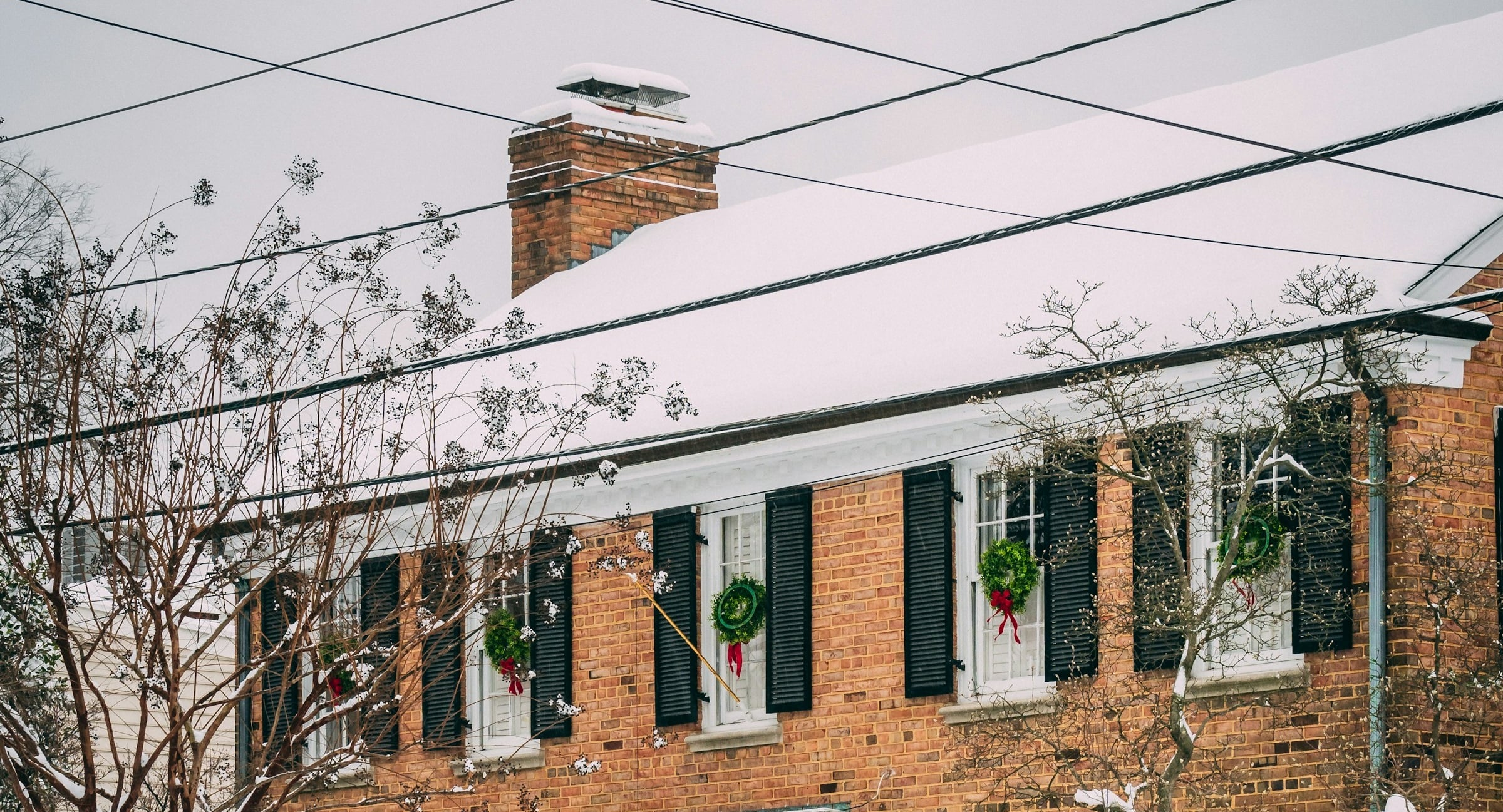
Anyone who lived in Hampton Roads in September of 2003 remembers Hurricane Isabel, and most remember it by how many days the power was out. Outages here do not need a hurricane, though, since summer thunderstorms, nor’easters that sit offshore for two days, and the occasional ice storm all bring lines down. A whole-home generator is the one purchase that answers all of those at once, and it is also a significant investment that is not right for every household. This post lays out what a standby generator does, the questions that tell you whether one makes sense for your home, and what installation involves on the coast.
What a whole-home generator does
A standby generator is permanently installed on a pad beside the house and fueled by natural gas or propane, so there is never anything to fill. It connects to your panel through an automatic transfer switch, and when the utility fails, the switch senses the loss, the generator starts on its own, and within 10 to 30 seconds the house has power again. Once the utility comes back, the switch hands the house back to the grid and the generator shuts itself down. You do not have to be home, awake, or able to lift anything for any of that to happen.
That is the difference from a portable generator, which must be rolled out, fueled, started by hand, and connected with cords. A portable unit will keep a refrigerator and some lights going through a short outage, while a properly sized standby unit will run the whole house, including the heating and cooling, which in a Hampton Roads August is the load that matters most.
The questions that settle it
The first question is how often you lose power and for how long, and the reliable way to answer it is with a list rather than a memory, since we all remember the big outage and forget the short ones. A household that has sat through two multi-day outages in five years has a pattern, and the pattern is what justifies the cost.
The second question is who and what in your home depends on power. Anyone who uses oxygen, a CPAP machine, a powered wheelchair, or refrigerated medication has a medical reason for backup power that outweighs the arithmetic. Older adults and infants also tolerate a 90-degree house in August, or a 40-degree one in an ice storm, far less well than the rest of us, which turns a comfort question into a safety one.
The third question is what else in the house stops when the electricity does. Homes on wells in rural Chesapeake and Suffolk lose their water entirely. Homes over crawl spaces on the region’s high water table lose the sump pump at the exact moment the storm is filling the space. Electric water heaters stop, and anyone who works from home loses income for every day the power stays off. Each is a reason the outage costs more than a refrigerator of spoiled food.
Sizing it for a coastal home
Standby generators range from roughly 10 kilowatts, which covers essential circuits, to 22 kilowatts and up, which covers a typical whole house including central air. The sizing detail that matters here is the heat pump. Most Hampton Roads homes heat with one, and on the rare cold nights a heat pump runs electric auxiliary heat strips that can draw 10 to 20 kilowatts by themselves, which is more than the air conditioner needs in summer. A generator that carries the house comfortably through a July thunderstorm may not carry the heat strips in a January cold snap unless it was sized for them or the system uses load management to shed them. Our technicians size from the equipment nameplates rather than square footage, and that calculation is part of every whole-home generator estimate.
What installation involves on the coast
The price of a whole-home generator has three parts: the unit, the electrical work for the transfer switch and panel, and the fuel connection, which is a new gas line for homes with natural gas service or a propane tank for those without. Because Russell’s American Mechanical handles the electrical work as well as the generator, the transfer switch and any panel work happen under one contract. Coastal installation adds two considerations inland homes skip. In flood-prone areas, the unit is set on an elevated pad so tidal or storm flooding does not reach it, and an enclosure that resists salt corrosion, usually aluminum, earns its cost over the years. Installation also requires a permit and an inspection, so the process takes weeks rather than days and does not happen the week a hurricane is in the forecast. Fall and winter, after storm season, are the practical months to plan one.
What it costs to own
Once installed, the generator runs a short self-test each week and needs a yearly service, with an oil change and a run under load. Salt air shortens the life of batteries and connections, so that yearly visit matters more here than it might elsewhere. The Generator Care Agreement covers yearly maintenance and takes 20 percent off service and diagnostic fees and 15 percent off parts and labor on repairs. Financing is available, and many homeowners spread the cost over time.
Talk it through with the numbers for your house
Russell’s American Mechanical has served Hampton Roads since 1977 and has installed standby generators across the region for decades. If you are weighing one, the useful next step is an in-home consultation, where a technician reviews your outage history, your household’s needs, your heating and cooling equipment, and your fuel options, and then gives you a firm price at everyday pricing for a properly sized system. You can schedule online, use the website chat, or call. Our technicians are trained to diagnose, explain, and present options, so whichever way the decision goes, you will make it with the numbers for your home rather than a guess.
