
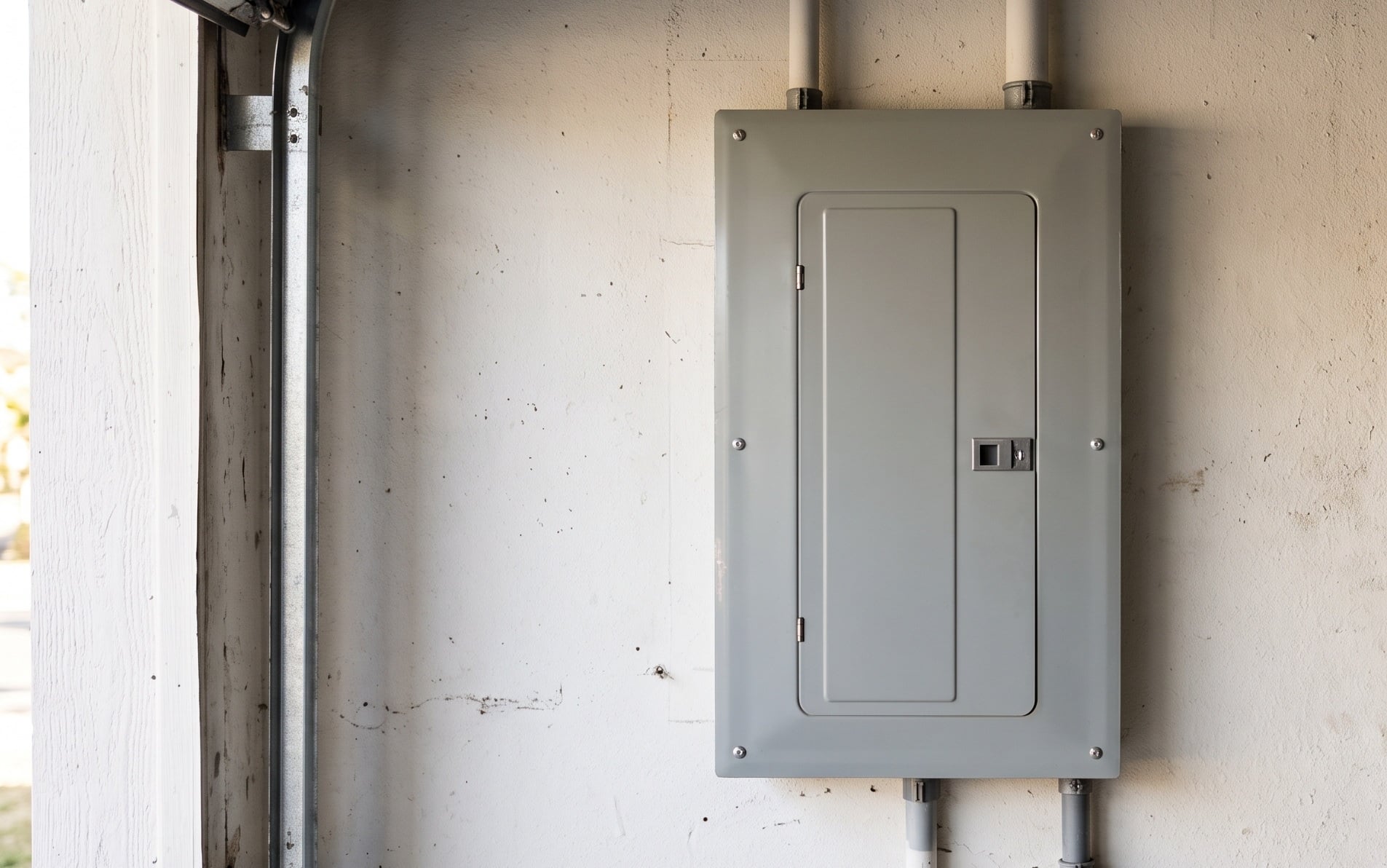
The electrical panel is the one part of a house that almost nobody thinks about until a breaker trips, and even then it usually gets reset and forgotten. That is understandable, because a panel that is doing its job gives you no reason to look at it. Panels do age, though, and the homes of Hampton Roads have changed around them: air conditioning, electric water heaters, home offices, and now electric vehicles all draw from a panel that may have been sized for a house with none of them. This post explains how to tell when a panel has reached its limit, what an upgrade involves, and what it makes possible afterward.
How panels fall behind
A panel has two limits: how much current the main can carry, measured in amps, and how many circuits it has room for. Many homes in Norfolk, Portsmouth, and the older parts of Chesapeake and Virginia Beach were built with 60- or 100-amp service, which was ample for the lights, the range, and a window unit or two. Add central air, an electric water heater, a dryer, a kitchen full of appliances, and a couple of home offices, and the same panel is carrying a load its designers never imagined. The panel also ages physically. Breakers wear with every trip, bus bars corrode, and connections loosen, and in coastal air all of that happens faster than it does inland.
The signs a panel is at its limit
- Breakers that trip regularly under ordinary use, or that will not stay reset, are telling you the circuit or the breaker has reached its limit.
- Lights that dim when the air conditioner, the dryer, or the oven starts point to a service that cannot supply everything at once.
- A panel that buzzes, crackles, feels warm, or shows rust, scorching, or corrosion inside has a problem that goes beyond capacity.
- A panel of 100 amps or less in a home with central air, an electric water heater, and modern appliances is usually working near its ceiling.
- A fuse box, or a panel from a manufacturer with a documented failure record, is a safety matter as well as a capacity one, and an electrician can tell you which you have.
- A panel that has no open slots, or one where someone has doubled up circuits on single breakers to make room, has run out of space.
The moments that force the decision
Panels often get upgraded not because they failed but because a home is about to ask more of them. An electric vehicle charger draws as much as a central air conditioner and needs its own circuit. A standby generator needs a transfer switch and a panel with the capacity to be fed by it. A heat pump replacing a gas furnace, a tankless electric water heater, a hot tub, or a kitchen remodel each add load that a 100-amp panel may not have. And in a coastal area, a panel that has been through a flood, or that sits in a garage that takes water in a nor’easter, needs evaluation even if it seems to work, because corrosion inside a panel is a fire risk that develops quietly. Insurance carriers also take an interest in panel type and age, and some will ask for an upgrade before writing or renewing a policy.
What an upgrade involves
A panel upgrade replaces the panel itself, and usually the main breaker, with a new 200-amp panel that has room to grow, along with new grounding and bonding to current code. The utility disconnects power for the work, which typically takes most of a day, and a permit and an inspection follow. If the meter base or the service entrance cable is corroded, which coastal homes often show, those are replaced at the same time. Our panel upgrade visits start with a load calculation that totals what the house draws now and what you plan to add, so the new panel is sized for the home you will have rather than the one you have today. The technician explains what was found, lays out the options at everyday pricing, and leaves the decision with you.
What it makes possible
The upgrade itself is not something you will notice day to day, which is the point. What you will notice is what it allows. An electric vehicle charger in the garage, a standby generator with a transfer switch, whole-home surge protection mounted at the new panel, and the headroom for the next appliance or addition all become ordinary projects rather than ones that start with someone saying the panel cannot handle it. A new panel also brings modern breakers that trip when they should, which on an older panel is not something to take for granted.
Getting a clear answer
Russell’s American Mechanical has served Hampton Roads since 1977, and our electricians look at panels across the region every week. If your home is showing any of the signs above, or if you are planning a charger, a generator, or a large appliance, an electrical inspection is the place to start. Schedule online, use the website chat, or call, and same-day appointments are available by phone when the day allows. The technician will tell you plainly whether the panel has years left or has reached its milestone, and financing is available if an upgrade is the answer.
