
A sump pump has one job, which is to move water out from under the house before it does harm, and it does that job with electricity. In Hampton Roads, the storms that put the most water under a home are the very storms most likely to cut the power to the pump. That is the whole difficulty in a sentence, and many homeowners here discover it during a nor’easter rather than before one. This post explains why the two failures arrive together on the coast, what a flooded crawl space costs, and the backup power options that keep the pump running.
Where the water comes from here
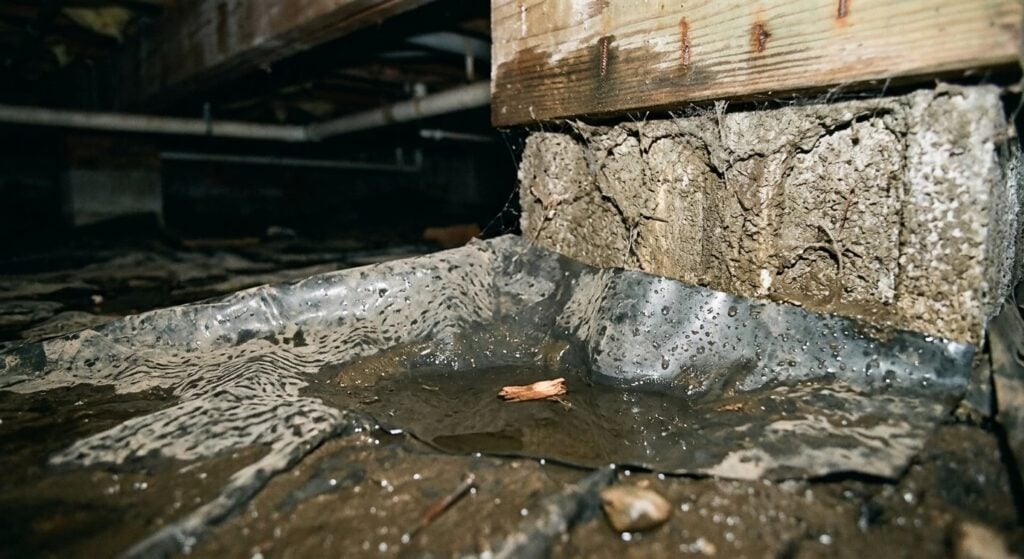
Hampton Roads sits low on a high water table, with tidal creeks and rivers through nearly every neighborhood. Many homes stand over crawl spaces, and when heavy rain, storm surge, or a high tide pushes the water table up, that water finds the lowest point under the house. A sump pit and pump sit at that low point and send the water out before it reaches the joists, the insulation, and the ductwork. The pump runs now and then in an ordinary month and almost without pause during a storm.
Why the pump loses power when it matters
The events that flood crawl spaces here are not ordinary rain. They are tropical systems, nor’easters that sit offshore for two days, and severe thunderstorms, and each brings the wind and lightning that bring down lines. Hurricane Isabel in 2003 left parts of the region dark for more than a week while the ground was saturated and the tide ran high. Nor’easters do the same on a smaller scale most winters. In each case, sump pumps stopped at the peak of the inflow, and a pump without power during a storm is a pit that fills, overflows, and lets the crawl space flood as if no pump had ever been installed.
What a wet crawl space costs
The damage from a flooded crawl space is slow, mostly hidden, and expensive. Standing water soaks the insulation beneath the floor, which sags and stops insulating. It wets the joists and subfloor, which soften and can rot over repeated wettings. It sits in the ductwork that runs through many crawl spaces here, and wet ducts push mold and musty air into every room of the house. Damp wood also draws the subterranean termites that are active across coastal Virginia. The cost of one flooded crawl space, counting the drying, the insulation, the ductwork, and any framing repair, is generally well beyond the cost of keeping the pump powered.
Battery backup pumps
The simplest option is a battery backup sump pump, a second pump installed in the same pit with a deep-cycle battery that takes over when the primary loses power. It needs no fuel, starts on its own, and costs less than any generator. Its limit is run time, because depending on how often the pump has to cycle, a battery lasts from several hours to a day or so. That covers a thunderstorm outage and often a nor’easter, but not the multi-day outages a hurricane leaves behind. A battery backup belongs in nearly every sump pump installation here, and our sump pump service includes testing the battery, since batteries fade over a few years and salt air does not help them.
Portable generators
A portable generator can run a sump pump for as long as someone keeps fueling it, which is both its strength and its weakness. Somebody has to be home, awake, and willing to go out into the storm to start it, refuel it every several hours, and keep it well away from the house. If the pump is hardwired rather than plugged in, connecting a generator requires a transfer switch installed by an electrician, which our electrical team handles. And if you are away when the storm arrives, which is often the case for waterfront second homes, a portable generator does nothing at all.
Standby generators
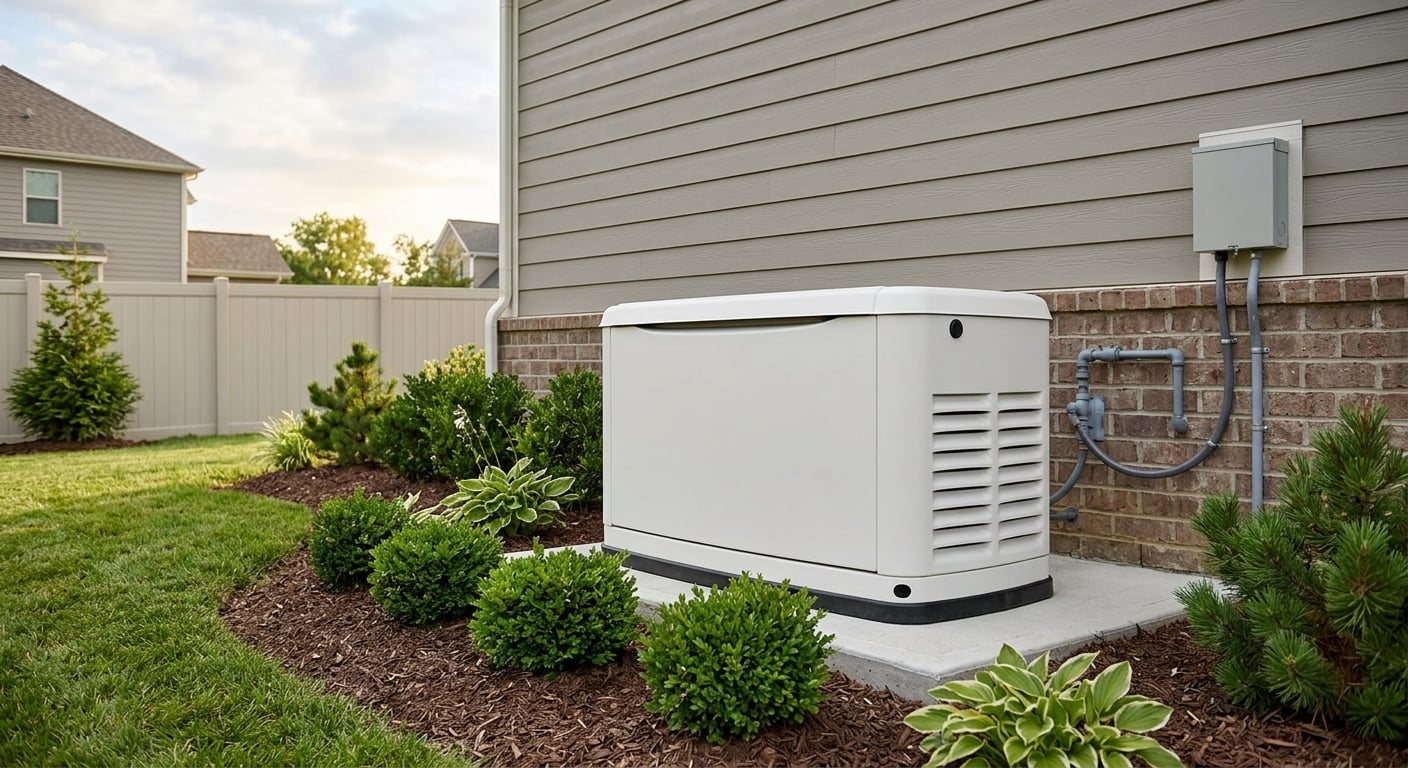
A whole-home standby generator solves the sump pump problem completely, and the rest of the house along with it. It is permanently installed, runs on natural gas or propane so there is no fuel to haul, and starts on its own within seconds of an outage whether or not anyone is home. The sump pump keeps running through a three-day outage as it would on any other day, and so do the heating and cooling, the refrigerator, and the well pump if you have one. For a home that already has a sump pump, the pump is a small item on the list of loads the generator carries, so it rarely changes the size of the unit needed. A whole-home generator consultation covers sizing, the fuel connection, and, in flood-prone areas, the elevated pad that keeps the unit above storm water.
Choosing among them
A practical way to decide is to ask how long your outages have lasted and whether anyone is home during storms. A battery backup handles short outages when someone is home. Long outages, an empty house, or a crawl space that has already flooded once point toward a standby generator, and many homeowners install both, so the battery bridges the seconds before the generator starts and covers the pump if the generator ever needs service. Relying on the pump alone does not work, because on the coast the power does not stay on during the storms that matter.
Keeping the pump running
Russell’s American Mechanical has served Hampton Roads since 1977 and installs and services sump pumps, transfer switches, and standby generators, which means the whole question is handled by one company rather than three. If your crawl space depends on a pump, schedule a visit online, through the website chat, or by phone. The technician will test the pump and any battery backup, review your outage history, and give you a firm price at everyday pricing for the backup power option that fits your home, with the decision left to you.
