
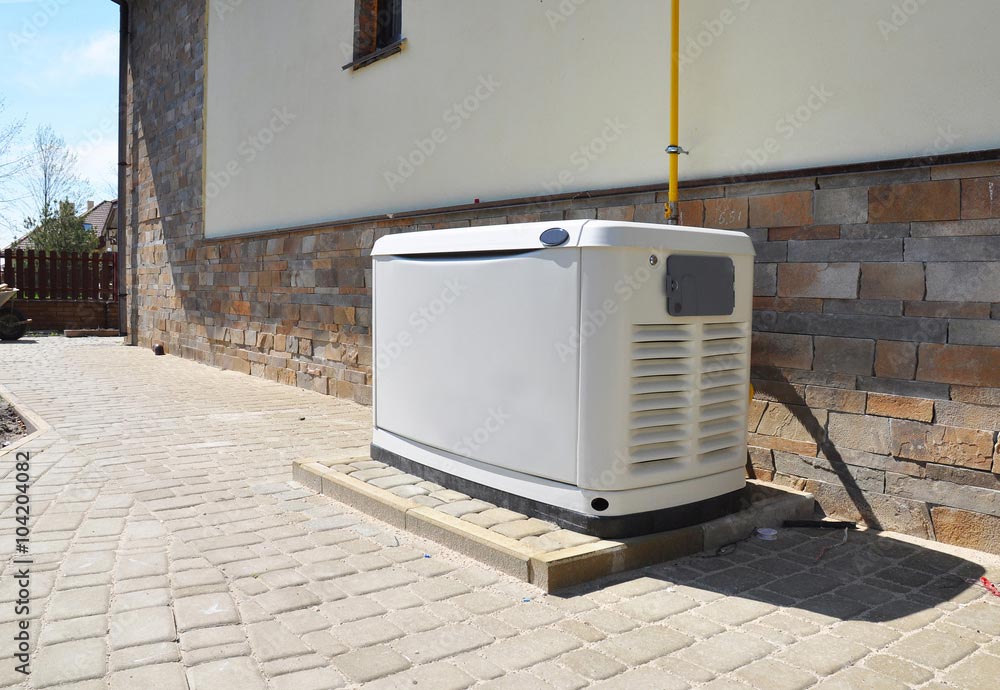
Most people who buy a standby generator in Hampton Roads do it after an outage to avoid facing the situation again. It is a significant purchase, and until the power has been out for four days in August, the benefits might seem abstract. This post is for the homeowner weighing that purchase before the next storm forces it. It sets out what a whole-home generator gives a coastal household, benefit by benefit. Whether one makes sense for your particular home is the subject of our post on when a whole-home generator makes sense.
A livable house in the weather that causes outages
Outages here arrive with the weather that makes them hardest to bear. Summer thunderstorms and tropical systems take the power on the hottest, most humid days of the year, and a closed house in August climbs into the upper 80s within hours with nothing pulling moisture from the air. Nor’easters and ice storms take it on the coldest nights, and a heat pump, furnace, or boiler does not run without electricity. A standby generator carries the heating and cooling system through the outage as it would on any other day, which for a household with an infant, an older adult, or anyone with a heart or breathing condition is a matter of safety rather than comfort.
Food and medication that keep
A refrigerator holds a safe temperature for about four hours without power and a full freezer for about two days, and after that everything is a loss. For most households that is a few hundred dollars of groceries and an unpleasant cleanup. For a household with refrigerated medication such as insulin, or with someone who depends on oxygen, a CPAP machine, or a powered wheelchair, the window is shorter and the stakes are different. A generator that starts on its own within seconds removes that clock entirely, and it does so whether or not anyone is home to notice the power went out.
Water that keeps moving
Two systems in a coastal home depend on electricity in ways that surprise people during a first long outage. Homes on wells in rural Chesapeake and Suffolk lose all water when the power fails, for drinking, flushing, and washing. And homes over a crawl space on the region’s high water table lose the sump pump at the exact moment the storm is pushing water under the house, so the flood the pump was installed to prevent happens anyway. A generator keeps the well pump and the sump pump running through the storm, along with the electric water heater, and for many homeowners that alone is the reason they bought one.
Equipment spared the damage an outage does
An outage is hard on the systems it interrupts. Power that flickers during restoration strains compressors and burns out capacitors and control boards, and a refrigerator or air conditioner that has cycled on and off a dozen times during a messy restoration is a repair waiting to happen. A standby generator’s transfer switch takes the house off the utility cleanly when the power fails and returns it cleanly when stable power is back, so the equipment sees one clean transfer each way rather than the flickers, and the generator itself delivers steady voltage while the grid is out. Paired with whole-home surge protection, it is the most complete protection a home’s electrical equipment can have.
A household that keeps working and stays connected
More of the region works from home than a decade ago, and an outage now means lost workdays as well as lost comfort. A generator keeps the router, the computers, and the lights on, so a three-day outage is an inconvenience rather than three days of leave. It keeps the security system running, the garage door opening, the phones charging, and the television on for the storm coverage.
All of it without anyone lifting a finger
The difference between a standby generator and the portable kind is what happens at two in the morning. A portable unit has to be rolled out, fueled with gasoline that may not be available, started by hand, connected with cords, kept twenty feet from the house, and refueled every several hours, by someone who is home and awake. A standby unit is permanently installed, runs on natural gas or propane so there is nothing to haul, and starts on its own within seconds through an automatic transfer switch, whether the household is asleep, at work, or out of town. Our post on generator options covers the types and features, and our post on what a generator can and cannot power covers the sizing that decides how many of the house’s loads it carries.
What it asks in return
The investment is the unit, the electrical work for the transfer switch, and the fuel connection, with financing available, and the upkeep is a weekly self-test the unit runs on its own and a yearly service visit. On the coast the service matters, because salt air works on the battery, the connections, and the enclosure, and the Generator Care Agreement covers the yearly visit with 20 percent off service and diagnostic fees and 15 percent off parts and labor on repairs. Since Russell’s American Mechanical does the electrical work along with the generator, the transfer switch and any panel work come under a single contract.
Talking it through
Russell’s American Mechanical has served Hampton Roads since 1977 and has installed standby generators across the region for decades. If the benefits above describe your household, the useful next step is an in-home consultation in which a technician reviews your outage history, your equipment, and your fuel options and gives you a firm price at everyday pricing for a properly sized unit. Schedule online, use the website chat, or call. Our technicians are trained to diagnose, explain, and present options rather than to sell, and the decision will be yours to make on a calm day rather than during the next storm.
